2002-10-06: Storm King Art Center:
-
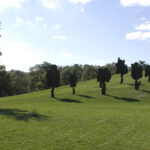
- Eight Positive Trees by Menashe Kadishman
-
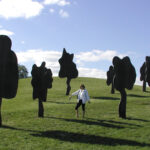
- Can you spot the fake tree?
-
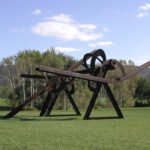
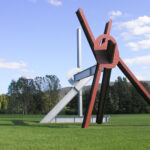
- Mozart’s Birthday (1989) by Mark di Suvero
-
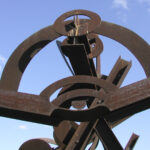
- Closeup of Mozart’s Birthday (1989) by Mark di Suvero
-
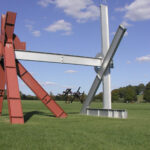
- Foreground: Old Buddy (for Rosko) iii by Mark di Suvero
-
- Pawel
-
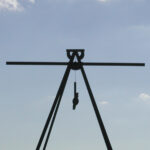
- Pyramidian (1986/1998) by Mark di Suvero
-
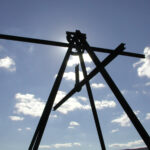
- Pyramidian (1986/1998) by Mark di Suvero
-
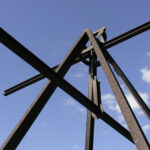
- Part of Pyramidian (1986/1998) by Mark di Suvero
-
- Pawel
-
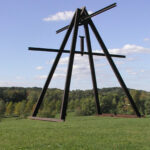
- Pyramidian (1986/1998) by Mark di Suvero
-
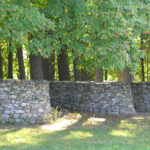
- Even a stone fence can be a sculpture Storm King Wall (1997-98) by Andy Goldsworthy; Field stone; Approximately 5′ x 2,278′ overall Come walk alongside Andy Goldsworthy’s extraordinary Storm King Wall. Created over a two-year period, the 2,278-foot-long site-specific sculpture was made using stones gathered from the Art Center property. The first part of the wall weaves in and out of trees, following and extending the path of an old stone wall that had existed previously on the site, meandering downhill to a nearby pond. The wall’s second section emerges out from the other side of the pond, continuing its westward “walk” uphill. According to historical maps, another wall originally existed in this vicinity, but its remnants are gone. The wall’s full extension physically links disparate areas of the property, from the trail overlooking Moodna creek to the south fields and the western border.
-

- Krysia
-

- PGK Art – Krysia
-

- Krysia
-
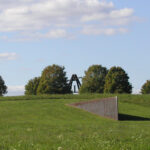
- Backgroung: Pyramidian (1986/1998) by Mark di Suvero Foreground: Schunnemunk Fork by Richard Serra (1990-9) [one of four pieces]; Weathering steel — Named for a nearby mountain, this site-specific sculpture was commissioned by Storm King from one of today’s foremost contemporary artists. Occupying a ten-acre field, the sculpture consists of four large rectangular plates, partially sunk into the earth so that only about two-thirds of their mass is visible; each plate marks an eight-foot drop in elevation. The sculpture highlights the undulating topography of the area and heightens our own awareness of the subtle changes in terrain at Storm King.
-
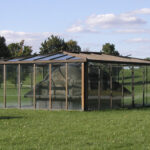
- Sarcophagi in Glass Houses [one of a set of four] (1989); Wood, glass, and iron; by Magdalena Abakanowicz To make this large four-part work, the prominent contemporary Polish artist reworked turn-of-the-century industrial molds from a French manufacturer, and created forms that evoke simultaneously the image of ancient sarcophagi and the human figure.
-
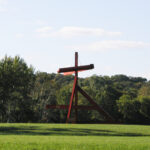
- Mother Peace (1969-70 ) by Mark di Suvero; Painted steel
-
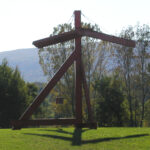
- Mother Peace (1969-70 ) by Mark di Suvero; Painted steel
-
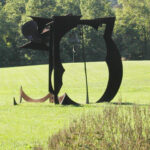
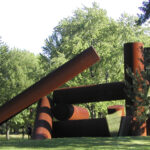
- For Chris (1991) by Mark di Suvero; Steel
-
- PGK Art: The bus driver
-
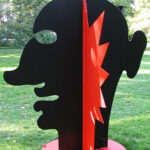
- A Two Faced Guy (1969) by Alexander Calder
-
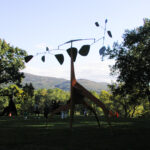
- Southern Cross (1963) by Alexander Calder
-
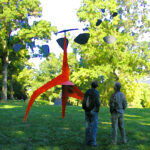
- PGK Art: Art appreciation — Southern Cross (1963) by Alexander Calder
-
- PGK Art: One of life’s many threesomes — the bride, the photographer, and the groom.
-
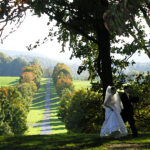
- PGK Art: They have climbed the hill, leading their two separate lives; now they have united, and they go off into the shadow of the unknown future.
-
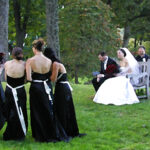
- PGK Art: Wisdom, Commitment, Excitement
-
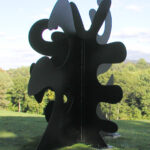
- Tripes (1974) by Alexander Calder
-
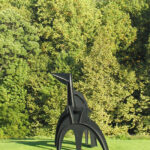
- Black Flag (1974) by Alexander Calder
-
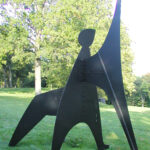
- Sabot (1963) by Alexander Calder
-
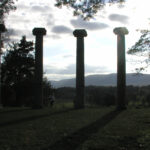
- Seen very faintly, the true pillar of my life “The five Ionic columns now situated on the Art Center’s property formed the front of Danskammer…the 1834 Edward Armstrong mansion located north of Newburgh that stood overlooking the Hudson River for almost 100 years.”
-
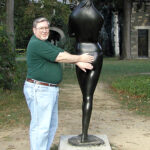
- Guardian of privacy and modesty
-
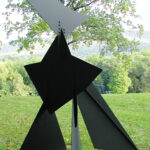
- Polygons on Triangles (1963) by Alexander Calder
-
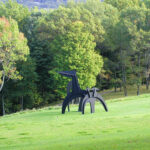
- Black Flag (1974) by Alexander Calder
-
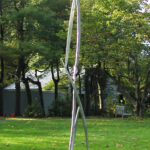
- Three Ovals Soar (1960) by David Smith
-
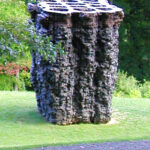
- For Paul (1990-92) by Ursula von Rydingsvard This monumentally scaled, unique wood sculpture evolved in three separate stages between 1990 and 2001. The work’s seed is its bottom-honeycombed layer was created and exhibited in 1990, but lay in her studio for two years, at which point she returned to it and began building walls up around its twelve openings, eventually absorbing the low piece into a tall, multi-bowl, undulating structure over 14′ high, work, completed in 1992. Titled For Paul, it was included in von Rydingsvard’s first museum exhibition, which was held at the Storm King Art Center in the same year. The work was finished in 2001 when the artist added three feet to its elevation, enhancing views into the work from above and adding emphasis to its presence in the landscape. Using 4″ x 4″ milled cedar beams as her modules, the artist constructed the work in her characteristic methodical, detailed manner-one beam at a time, cut, stacked and ultimately secured internally and glued in place. The surface was finished by rubbing powdered graphite into the cedar, a technique she pioneered in the late 1970s. For Paul embodies adjectives that are often used to describe von Rydingsvard’s early childhood in Germany, where she was shunted to eight displaced persons camps in five years: containment, structure, rhythm, and drama. This sculpture epitomizes the tension between the containment and expression of emotion. Von Rydingsvard merges the subjective approach of Abstract Expressionism with the modular, gridded format of Minimalism, creating a scarred surface that suggest both a psychological landscape and the forces of natural erosion.
-
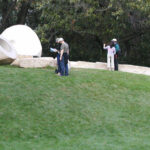
- Momo Taro (1977-78), Granite, by Isamu Noguchi This nine-part, 40-ton, commissioned site-specific stone sculpture provides seating atop a specially landscaped hill with sweeping views of the Art Center fields, reflecting the artist’s life-long desire to create functional spaces for personal interaction. While gathering the stones for the piece near his studio on the island of Shikoku in Japan, a huge boulder was split, reminding the artist of Momo Taro, an ancient Japanese folk hero who was born from a peach pit. This is one of two sculptures in the Art Center that is intended for visitors to sit on and in.
-
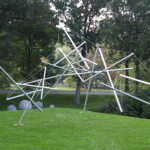
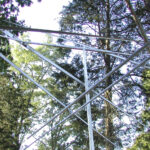
- Free Ride Home (1974) by Kenneth Snelson Set on a carefully landscaped grassy knoll, Snelson’s architecturally-scaled, open, lattice-work sculpture appears as light as a constellation of stars. Free Ride Home was erected in a half-hour by a crew of four men and has never required any adjustment. The self-supporting structure depends on a system in which the wires function like muscles and the tubes like bones, in a taut balance of tension and compression.
-
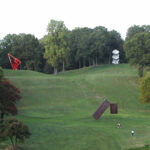
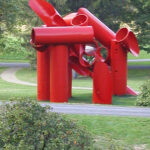
- Far left: Adam (1970) by Alexander Liberman Far right: Three-Fold Manifestation II (1987) by Alice Aycock Foreground: Suspended (1977) by Menashe Kadishman
-
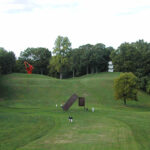
- The hills are alive with sculpture
-
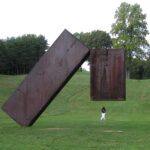
- Relative size Suspended (1977) by Menashe Kadishman
-
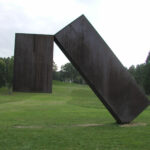
- Suspended (1977) by Menashe Kadishman
-
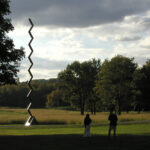
- Photo opportunity — Endless Column (1968) by Tal Streeter
-
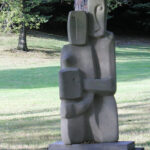
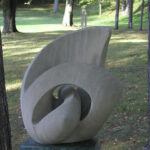
- The stone family
-
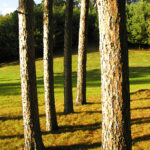
- PGK Art: Leader of the pack
-
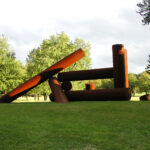
- Adonai by Alexander Lieberman
-
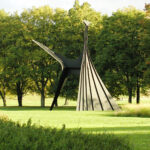
- The Arch (1975) by Alexander Calder Alexander Calder, famous for his invention of the mobile, created an important body of large-scale free-standing sculptures that did not move – these are known as “stabiles.” Each work in this group characteristically blends his love of colorful and playful curvilinear forms derived from nature with the scale of small buildings or shelters. This monumental, architecturally scaled stabile (fifty-six feet high) is among the last of Calder’s career; it merges two important aspects of his development, the architectonic and the rounded, abstract biomorphic shapes vaguely reminiscent of natural forms. Calder was often frustrated by the limits of interior spaces and longed to see his work displayed outdoors “where the sky could be my ceiling.”
-
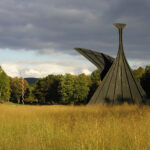
- On the right: The Arch (1975) by Alexander Calder On the left: Endless Column (1968) by Tal Streeter
-
-
The End; To Exit, enter the “Esc” Key
or
