Category Archives: Krysia
February 5, 2017 — New Third Cousin (Magdalena Maczynska)
Dear William, Daniel, Catherine, Michael, and Sarah, (and your parents), (and any future descendants and their parents),
Congratulations! You have a NEW Third Cousin! Her name is Magdalena Maczynska, and she was born on February 1, 2017, in Warszawa Poland.
.
Probably, the easiest way for you to understand this Family Tree is to print it out, and then paste the pages together (each next to each other) — to do so, go HERE.
As you can see from this Family Tree, Magdalena is the daughter of Marek’s, Rysiu’s, & Malgosia’s Second Cousin, Kasia Maczynska (nee Tomala), who is the daughter of my First Cousin, Roza Tomala (nee Bobrowska), who is the daughter of my Dad’s sister, Teresa Bobrowska (nee Kostro).
I met Kasia (Magdalena’s Mom), when Malgosia, John, Marek, Kelly, Babcia Krysia and I traveled to Poland in 2006 — I started telling you about that trip HERE (unfortunately, I never got around to telling you the rest of that story — maybe I will have a chance to do so soon).
Anyway, on our second day in Poland, we attended a dinner hosted by my First Cousin Roza and her family. That is when I met Kasia.
-
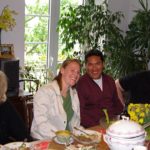
- In Roza’s & Slawek’s apartment: Kelly, Malgosia, John & Pawel
-
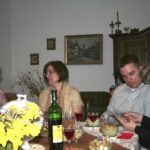
- 5/6/2006: In Roza’s & Slawek’s apartment: Roza T, Krysia, Marek, Kelly
-
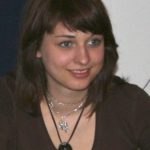
- 5/6/2006: Katarzyna/Kasia Tomala (now, Kasia Maczynska)
-
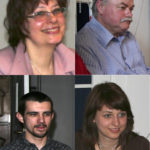
- omala family: Roza, Slawek, Maciej, Katarzyna
On May 26, 2012, Kasia married Piotr Mączyński.
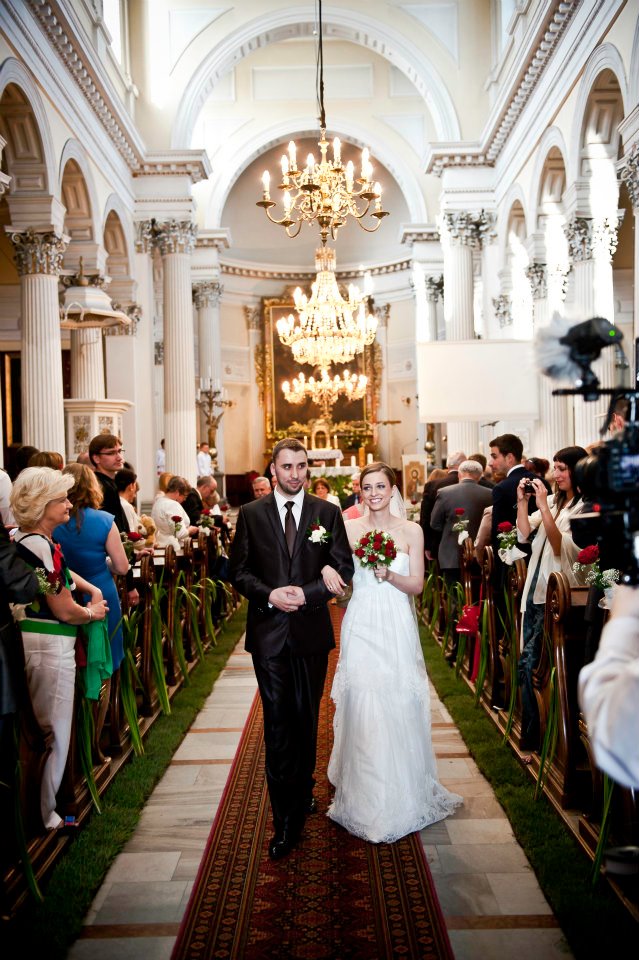
5/26/2012
Together, Piotr and Kasia set up a photography business — FlipFrames
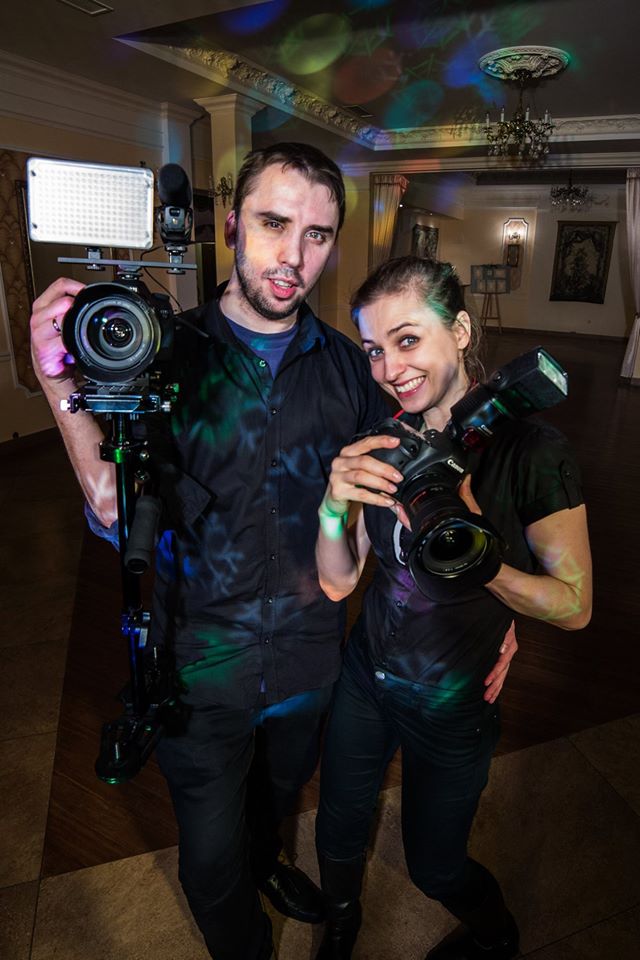
Piotr & Kasia
I hope that each of you will have the chance to open your own business some day — it is hard work, but it can be very rewarding.
Today is the Superbowl — so, I have to run (I need to prepare some snacks).
Love,
Dziadziuś Paweł.
Back to Annual Albums OR Family Letters
2017-01-21: Women’s March
January 15, 2017 — Marriage & How Babcia Krysia Became a Contender
Dear William, Daniel, Catherine, Michael, and Sarah, (and your parents), (and any future descendants and their parents),
You may remember how I told you about the night that Babcia Krysia became a contender — well, that leads me to a larger topic: Marriage.
Marriage means different things to different people (some believe that it is a union between a man and a woman; some believe that it is a life-long union; etc.) — I will give you MY perspective.
To me, marriage is a commitment, a contract, between two persons, who agree to work together to form a family; who agree to love each other; and who agree to support each other.
When two people marry, they create a new bud in a family tree — actually, in two family trees. Before the marriage there were two families, each with its own heritage, its own history, and its own customs — but, once one member of one of these two separate families marries the other person, who is a member of the other family, that marriage joins the two families into a new, larger family. And, the couple who got married, become a new bud, from which a new family branch may grow. That branch can create additional diversity, if one or more child is born, or added by adoption.
So looking at our family — there was the Weglewski family, from which Prababcia Irena Neumann (nee Weglewska) came; and there was the Neumann family, from which Pradziadek Hernyk Neumann came; and there was the Dzikowski family, from which Prababcia Irene Kostro (nee Dzikowska) came; and there was the Kostro family, from which Pradziadek George Kostro came.
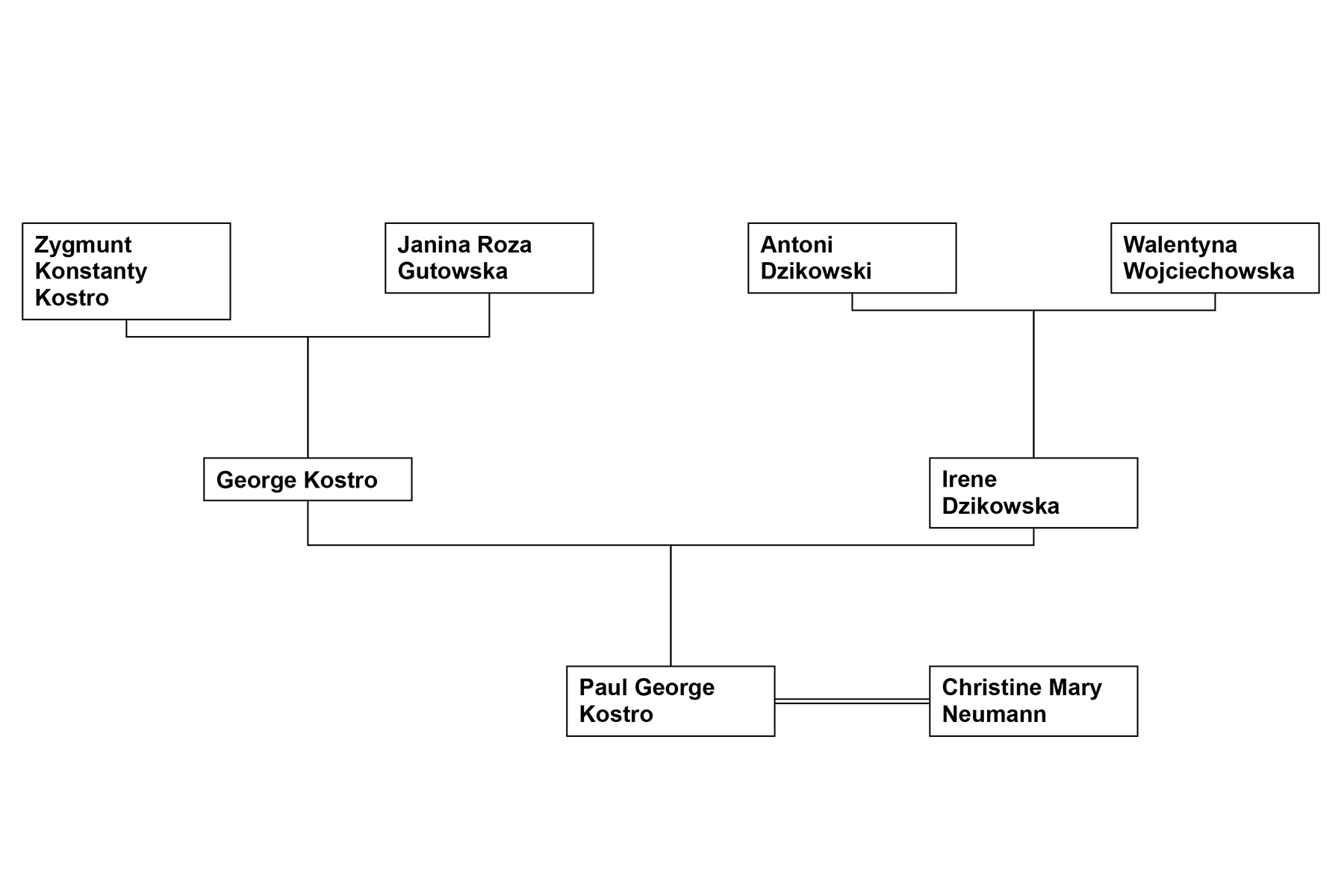
Prababcia Irene Kostro and Pradziadek George Kostro met, and married — that united the Dzikowski family and the Kostro family. I came from that joined family.
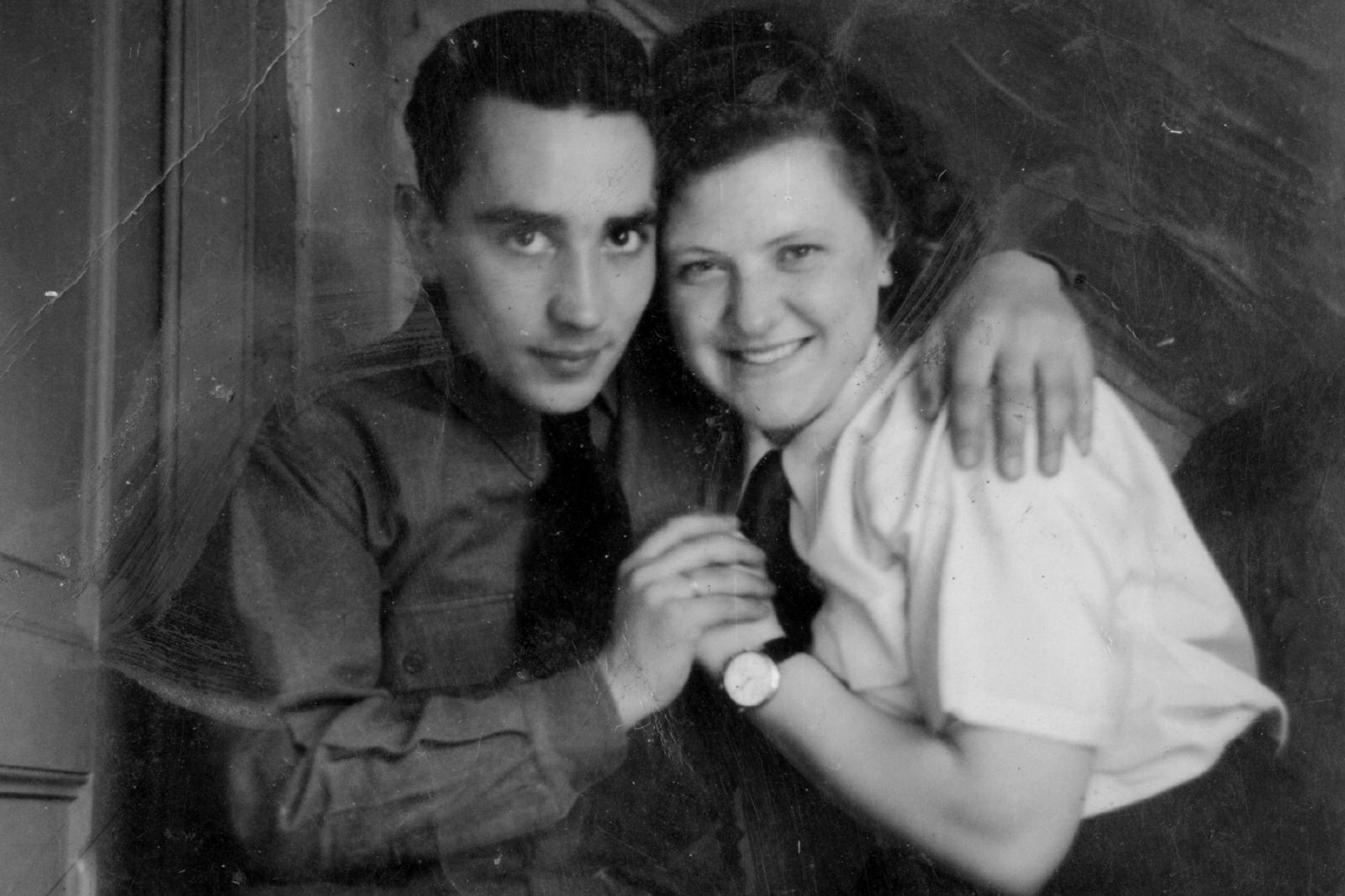
Circa 1948
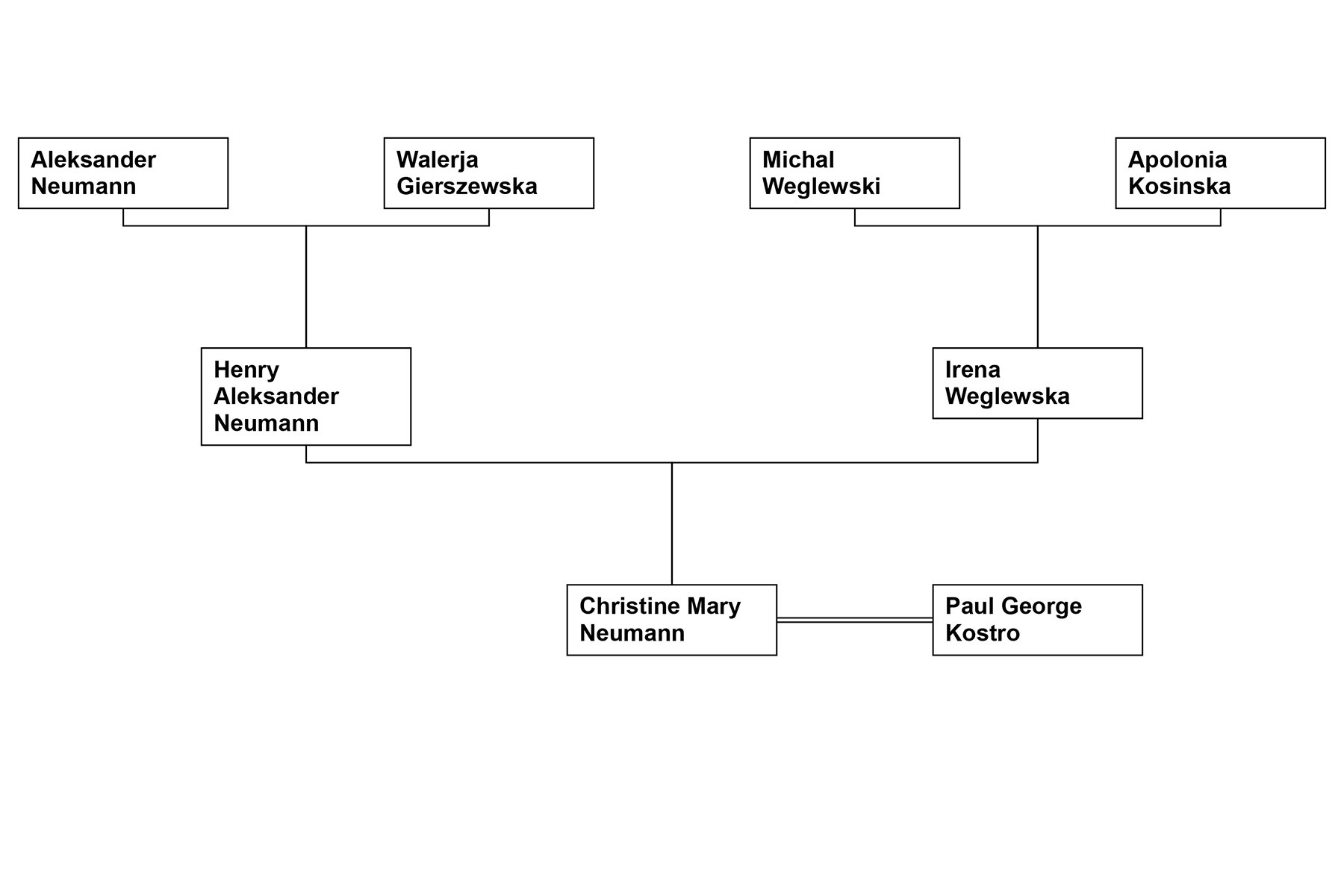
Prababcia Irena Neumann and Pradziadek Hernyk Neumann met, and married — that united the Weglewski family and the Neumann family. Babcia Krysia came from that joined family.
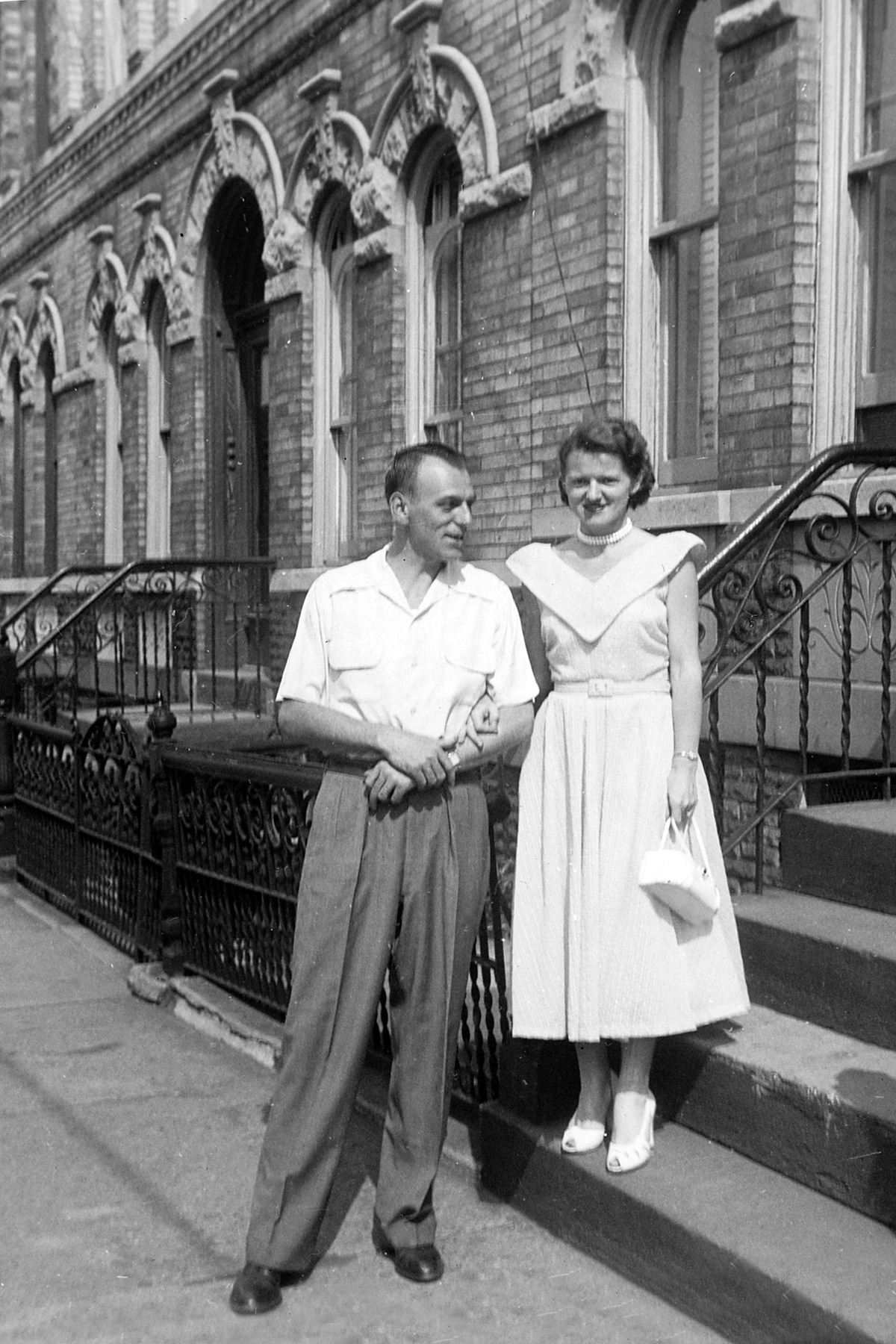
Circa 1950
When I was much younger, I started dating girls — I already told you a bit about that. I dated many girls; however, as I got older, I started thinking seriously about marriage. To me, marriage was the beginning of a new family — I hoped to have children; and I was committed to a life-long relationship. So, I started thinking about what marriage meant to me. To that end, I needed to think about who I was.
I thought of myself as being Argentinian by birth; Polish by decent; and American by choice; and a Roman-Catholic. At that time, I was active in the Polish community, particularly in the Polish Scouting movement in the United States. I came from a good family; I was educating myself; and I was ambitious.
It was important to me to find someone who can relate to me; and to whom I could related as well — thus, a common heritage became a focal point. I dated girls of various backgrounds, but when there was a lack of common heritage and a lack of common life experiences, the relationships were often very superficial. Some of the girls I dated were BEAUTIFUL, but I was keenly aware that beauty is only skin-deep. I wanted more — I wanted someone who would be a good Mom to my children; I wanted someone who would be good to me; I wanted someone who would understand where I was coming from.
And so, the night that Babcia Krysia became a contender, I thought to myself — wow, she is very nice. Of course, there was the problem that I had a girlfriend; and Babcia Krysia had a boyfriend; but, we did have commonality — we both spoke Polish and English; we each knew a bit of Polish history, and how it related to our American lives; we both came from “Polish families,” that shared the experiences of World War II; we both were involved in Polish Scouting; we were both Roman-Catholic; we both enjoyed the outdoors; and we both believed in education — actually, at that time, Babcia Krysia envisioned herself being a perpetual student, always learning new things [that changed — she is no-longer interested in going to school].
When we began dating, Babcia Krysia and I spoke to each other in English; but, when we went to each other’s houses, both of us could communicate with the entire family — including those who did not speak English.
I learned quickly how wonderful Babcia Krysia was — she was fun; she was adventurous; she was open-minded; she was good-looking; she was smart; she understood the world as I perceived it; and she shared my vision of being a good parent and having a happy family.
Over time, before we married, we talked to each other — we got to know each other, we got to really like each other, and we started to love each other. That love began to grow; it grew with the respect we had for each other — to the point that I decided that I wanted to marry her (convincing HER was now the challenge — for that I used every trick I could think of; with success achieved on December 25, 1971, when she said “YES.” We were married the following June — June 3, 1972.
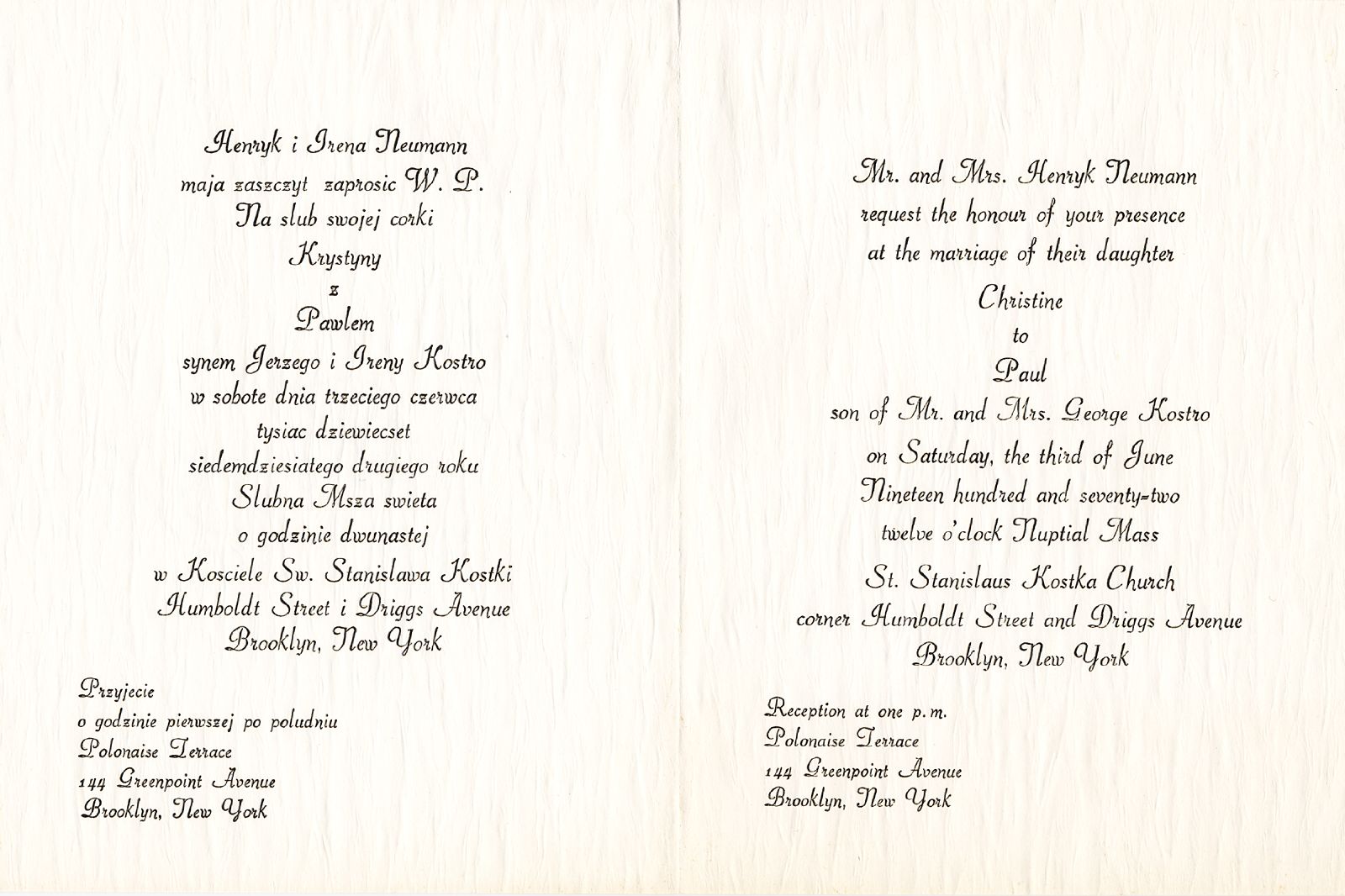
Our Wedding Invitation
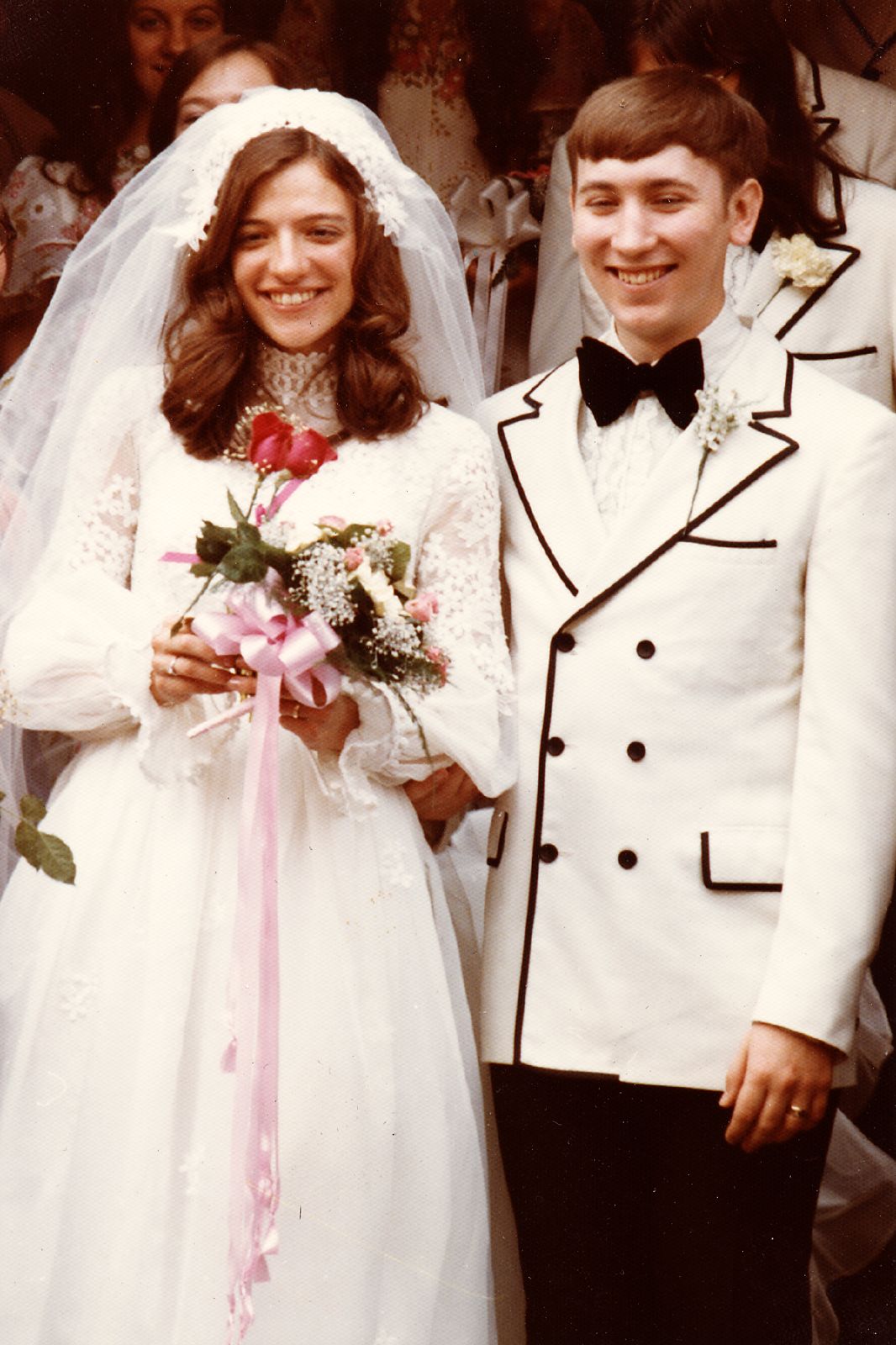
June 3, 1972: our wedding
So, when YOU decide to marry some day, if you decide to marry (I hope you will), be aware that getting married is easy, but being a good spouse requires a LOT of hard work. Before you marry, think about who YOU are; and what YOU want in life. When you consider candidates for your spouse, think about how that person will help you to be happy; how that person will help you achieve your goals and dreams; and be sure that YOU are equally committed to making your spouse happy; and to helping your spouse achieve THEIR goals and dreams.
Should YOUR marriages turn out to be as wonderful as mine was (and is), I am VERY happy for you — and, I congratulated you on your fine choice!
Love,
Dziadziuś Paweł.
Back to Annual Albums OR Family Letters
2016-01-01: New Year’s at the Sasieta’s
2015-12-25: Christmas (Part 2)
November 22, 2015 — Assassination of President Kennedy
Dear William, Daniel, Catherine, Michael (and Baby Girl Y) (and your parents), (and any future descendants and their parents),
Today is November 22, the anniversary of one of the three of the darkest and most somber days in recent American history — Pearl Harbor, the Assassination of President Kennedy, and 9-11.
I already spoke to you about Pearl Harbor and about 9-11; today, let me tell you about the Assassination of President Kennedy.
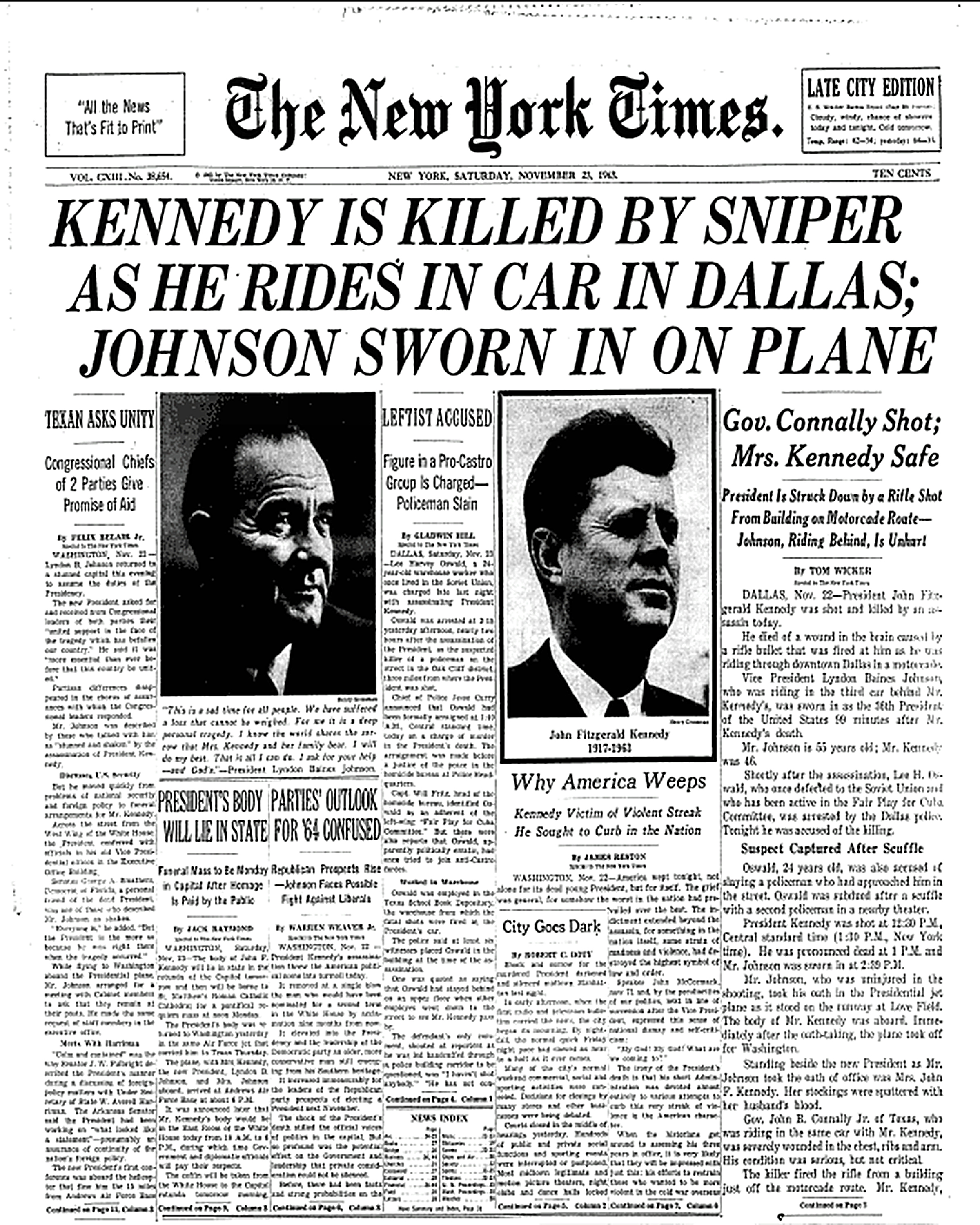
In the afternoon, on Friday, November 22, 1963, I was in Bookkeeping class, waiting for class to start — I was a 14-year-old Freshman in Mater Christi Diocesan High School, in Astoria, Queens, New York — you can see my Yearbook picture HERE [bottom left corner of page 84] (I was in the 1967 graduating class; Babcia Krysia was in the 1970 graduation class — you can see Babcia Krysia’s Yearbook picture HERE [middle of the page on page 111]).
Anyway — I was sitting at my desk in Bookkeeping class, waiting for our teacher to come in (although most of my teachers were De La Salle Christian Brothers, my Bookkeeping teacher was a lay male teacher). Class was already scheduled to start, and our teacher was not there yet — a few minutes later, he came in, very serious, and told us to sit in our places, and wait — and he left the room. When he returned a few minutes later, he told us that the President had been shot. A few minutes later, the whole school was summoned to the Auditorium, where we were officially told that there had been an assassination attempt on President Kennedy; and that the school would close early — we were told to go to our lockers, take our things, and go home.
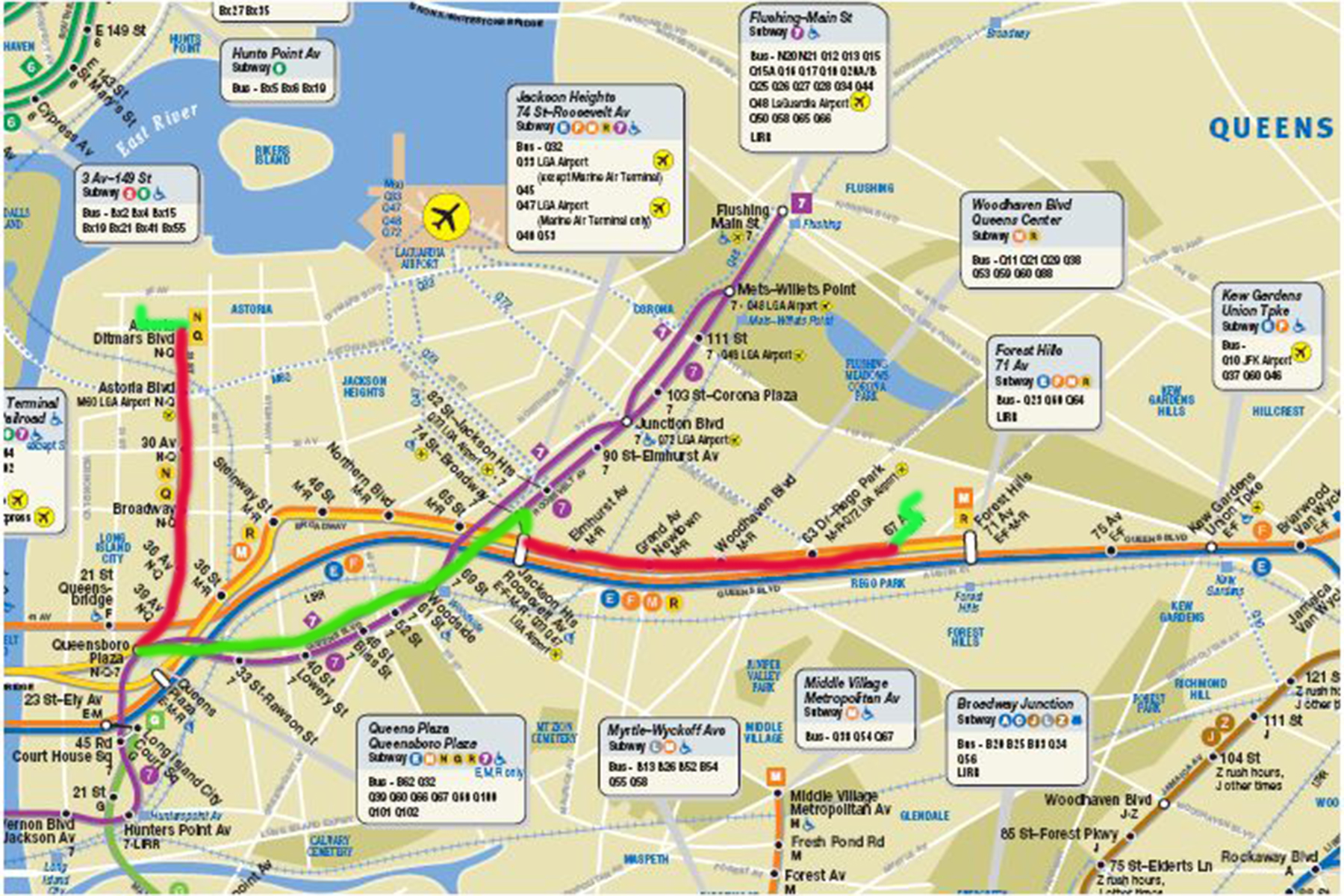
From school, in Astoria, I would walk (green) a few blocks to the Ditmars Boulevard train station; take the elevated train (red) to Queensboro Plaza; switch to elevated express train (green) going to Flushing, change to the local train at Woodside, and get off in Jackson Heights; walk to the underground local train (red) to Forest Hills, and get off at my station, 67th Avenue; then walk (green) a few blocks to my apartment.
To go home required me to take the subway, from Astoria to Forrest Hills — this would involve several different trains, and the journey, normally lasted about an hour and a half each way. I remember the train was crowded, and I overheard people talking — the President had been killed.
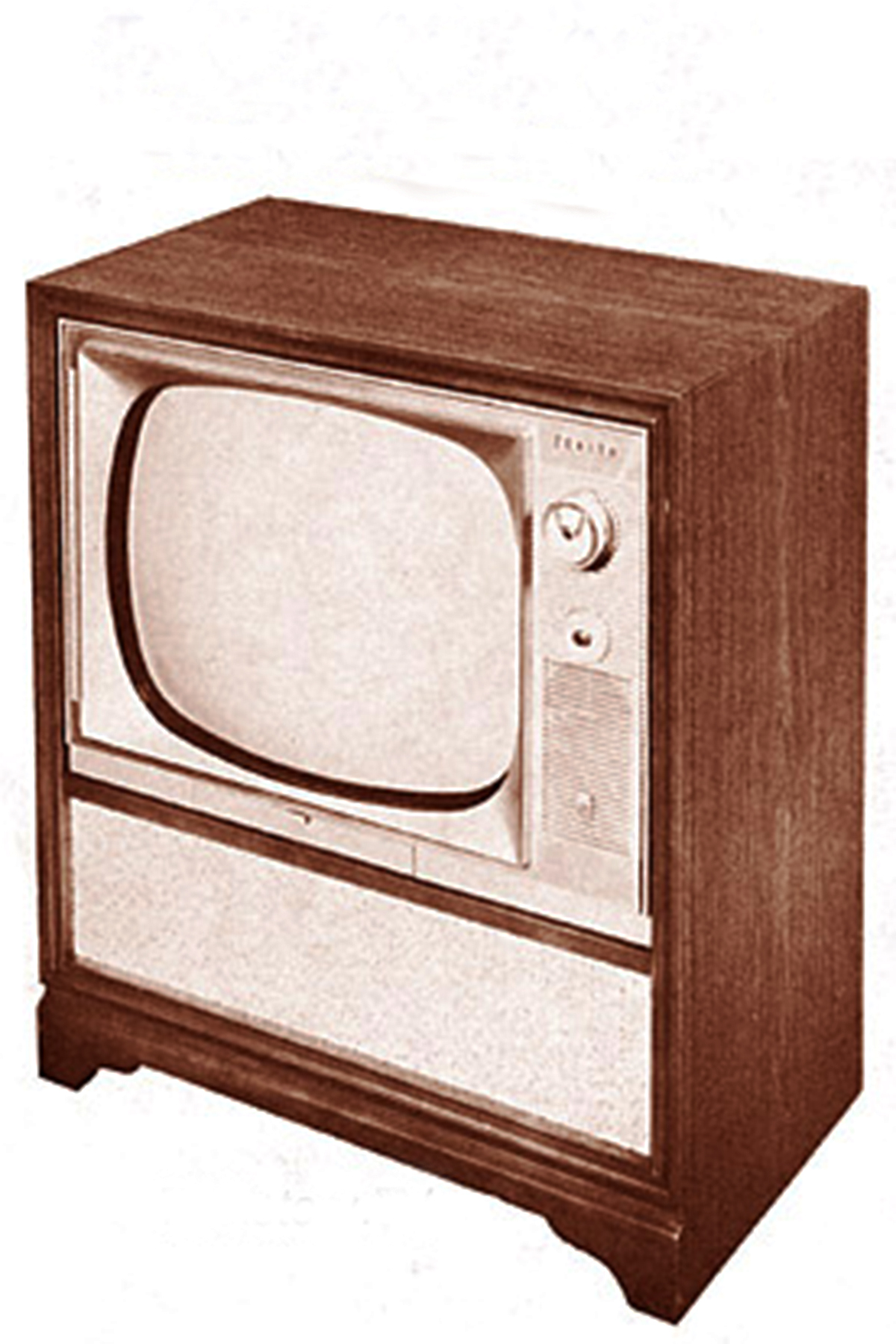
My Dad purchased a 21 inch Zenith black & white television set when my Mom and my brother and sisters moved to America in June 1959
I think that I got home about 4 pm. My Mom was there, and I think that my brother and sisters were home also; my Dad joined us when he got home from work, later in the evening. We watched the news on television all weekend. Shortly after the assassination, Lee Harvey Oswald was captured and arrested for the murder; however, two days later, Lee Harvey Oswald was assassinated himself, on live television. These assassinations were followed by President Kennedy’s funeral, all of which we all watched on television.
I was ten years old when I came to America on June 2, 1959. At that time, Dwight Eisenhower was President. Democracy and free elections were new concepts for me — in January 1960, Senator John Kennedy initiated his campaign to be elected president.
In September and October, Kennedy appeared with Republican candidate Richard Nixon, then vice president, in the first televised U.S. presidential debates in U.S. history. Although I did not watch the debate, I remember my Dad watching; and in the days that followed, there was much discussion about the debate on radio, television, and the newspapers.
On Saturday, November 5, 1960, I went to see Senator Kennedy, who was going to give a speech in the vicinity of 62nd Drive and Queens Boulevard (in Rego Park, Queens, NYC). This was my first political rally — I saw him, and I heard him speak; I was impressed, and it was very exciting.
Senator Kennedy was very controversial; because, at age 43, he was considered by many to be too young to be President; AND, he was a Roman Catholic. Nevertheless, on November 8, Kennedy defeated Vice President and Republican candidate Richard Nixon in one of the closest presidential elections of the 20th century. Because I was only eleven years old, I did not vote for him; and my parents did not vote for him either, because they were not U.S. Citizens yet (we were Resident Aliens).
John F. Kennedy was sworn in as the 35th president at noon on January 20, 1961. In his inaugural address he spoke of the need for all Americans to be active citizens, famously saying, “Ask not what your country can do for you; ask what you can do for your country.” He also asked the nations of the world to join together to fight what he called the “common enemies of man: tyranny, poverty, disease, and war itself”.
At the time that President Kennedy took office, in 1961, the US and the USSR were in a “Space Race.” At that time, the USSR was winning — on October 4, 1957 they achieved the orbiting of Sputnik 1; and later, they beat the US to the first human in space, cosmonaut Yuri Gagarin, on April 12, 1961. Eventually, the US won this Space Race, by landing the first man on the moon.
In addition to the Space Race, at the time that President Kennedy took office in 1961, there was much political tension between the US and Cuba — in 1958, Fidel Castro overthrew the US aligned government in Cuba, and let the country towards a Marxist-Leninist form of government.
As a consequence of this change in government, many people fled Cuba. Some of these people became my friends; and classmates at Our Lady of the Angelus grammar school. [You may want to read my letter to you about West Side Story; and also the bottom of Page 78 and top of Page 79 from my Book.]
In April 1961, some Cuban refugees attacked the Castro government in what became known as the Bay of Pigs Invasion. Those refugees had been led to believe by their CIA contacts that if they attacked Cuba, the US would support them militarily. In the midst of the Invasion, President Kennedy, however, decided NOT to provide military support — this betrayal made me very skeptical of US government “promises.”
In August 1961, tensions between the US and the USSR escalated when the Berlin Wall was built, completely cutting off (by land) West Berlin from surrounding East Germany, including East Berlin. This Wall generated a steady stream of news reports, on television and in the newspapers, about people trying to escape to freedom, and sometimes dying in the process. [Some day I will have to tell you the story of my cousin Lilka, and how she and her husband escaped from Poland.]
The tensions between the US and the USSR reached a fever-pitch during a 13-day (October 16–28, 1962) confrontation over Soviet ballistic missiles deployed in Cuba — this became known as the Cuban Missile Crisis. In anticipation of a nuclear war, in school and in society in general, we practiced going to Fallout Shelters, and otherwise hiding from nuclear blasts.
So, this was the political and social climate [all part of the Cold War] during President Kennedy’s tenure as President of the United States, from January 1961 until his assassination in November 1963.
Politically, those were not fun times; and yet, I survived, and I did have fun — I grew up; I finished high school, and went to college; I was involved with Polish Scouting — through which I got to know your Babcia Krysia, which eventually made all of YOU possible.
Love,
Dziadziuś Paweł.
Back to Annual Albums OR Family Letters
2015-10-29: Daniel’s 3rd Birthday
2015-10-24 to 26: Visiting Kasia, Stephanie & Rysiu
August 15, 2015 — Woodstock

You must be logged in to post a comment.