Dear William (and Daniel, Catherine, Michael & Baby Girl Y) (and your parents), (and any future descendants and their parents),
Here is a copy of my Baptismal Certificate:
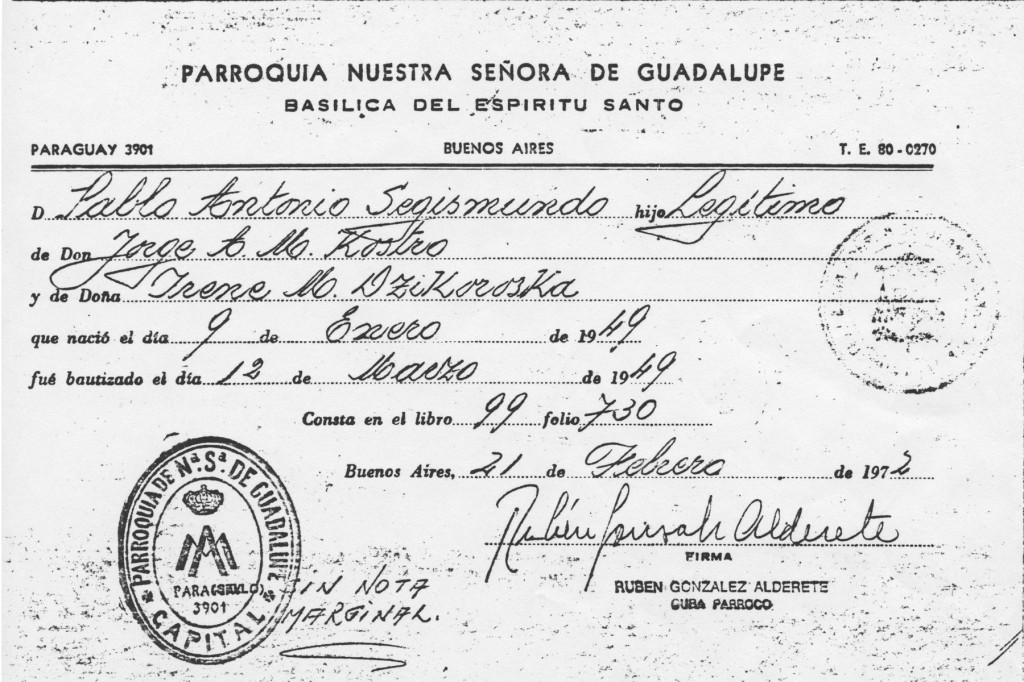
It states (in Spanish):
======
Parroquia Nuestra Senora De Guadalupe
Basilica Del Espiritu Santo
Paraguay 3901 Buenos Aires
Pablo Antonio Segismundo, legitimate son of Mr. Jorge A. M. Kostro and of Mrs. Irene M. Dzikowska, who was born January 9, 1949, was baptised on March 12, 1949.
======
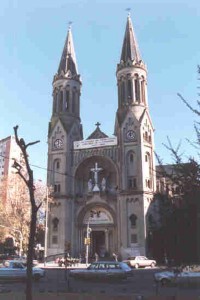
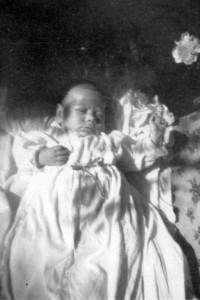
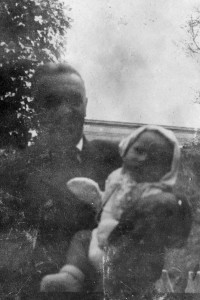
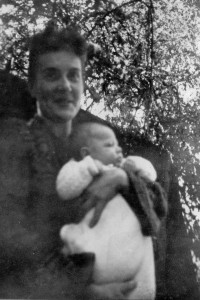
Here is a picture of the church where I was baptized; a picture of me, in my Baptismal Gown; and with my Substitute Godfather (my Mom does not remember who that was?!; this person was substituting, I believe, for Wojcio Bolek, who could not attend because he resided in the U.S.) and my Substitute Godmother (Janina Krzyzanowska, who later moved to Chicago, Illinois, where she remarried and was then known as Janina Bobrowska — no relationship to my Ciocia Teresa and my cousins Piotr and Roza in Warszawa, Poland; I believe that she was substituting for Ciocia Jola, who could not attend because she resided in Poland).
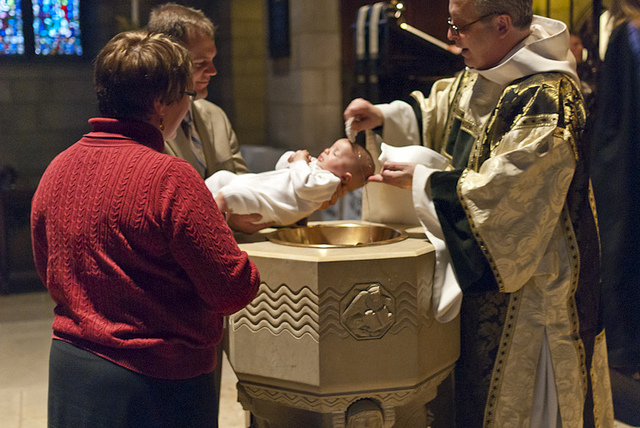
In the Roman Catholic Church, baptism is seen as the first and basic sacrament of Christian initiation. That means that once you are baptized, you can call yourself a Catholic; and without baptism, you are not a Christian.
Baptism is conferred by pouring water three times on the recipient’s head, while reciting the baptismal formula: “I baptize you in the name of the Father and of the Son and of the Holy Spirit” (cf. Matthew 28:19).
I always was fascinated by the fact that in case of necessity, anyone intending to do what the Church does, even if that person is not a Christian, can baptize.
The Catechism of the Catholic Church states: “Holy Baptism is the basis of the whole Christian life, the gateway to life in the Spirit, and the door which gives access to the other sacraments. Through Baptism we are freed from sin and reborn as sons of God; we become members of Christ, are incorporated into the Church and made sharers in her mission: Baptism is the sacrament of regeneration through water in the word.”
Baptism frees from original sin and all personal sins (of course, a baby did not yet have a chance to commit any personal sins; but, if you are baptized later in life, this is a very good sacrament).
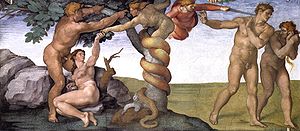
Original sin is regarded as the general condition of sinfulness, that is (the absence of holiness and perfect charity) into which humans are born, distinct from the actual sins that a person commits. This teaching explicitly states that “original sin does not have the character of a personal fault in any of Adam’s and Eve’s descendants. In other words, human beings do not bear any “original guilt” from Adam and Eve’s particular sin.
“Sin” is often used to mean an action that is prohibited or considered wrong. Sin can refer not only to physical actions taken, but also to thoughts and internalized motivations and feelings. Thus, any thought, word, or act considered immoral, selfish, shameful, harmful, or alienating might be termed “sinful”.
There is a distinction between destructive (deadly) sins (mortal sin) and the merely dishonorable (harmful) sins of careless human living (venial sin). Mortal sins (sacrilege, murder, mortal violence, devastating calumny, hatred) are said to have the dire consequence of mortal penalty, while sins of careless living (gluttony, casual or informal sexuality, constant play, inebriation, gambling) have been philosophically regarded by some as essential spice for “transcendent” living, even though these may be destructive in the context of human living (obesity, drunkenness, vagrancy, infidelity, child abandonment, criminal negligence).
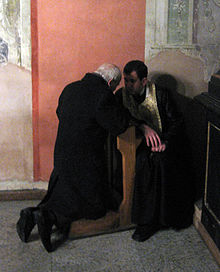
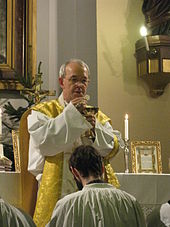
Once you sin, you need the sacrament of reconciliation; and once you have reconciled with God, you can come into grace again by partaking in the Blessed Sacrament.
As human beings, we all sin; the key is to try to avoid sin as much as possible; and when we do fail, to promptly pick yourself up, confess, and reconcile; and then accept the Blessed Sacrament.
William, remember — God loves you; your Parents love you; your family loves you. For your part, return the love.
Love,
Dziadziuś Paweł.
Back to Annual Albums OR Family Letters
