-
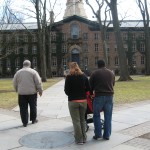
- We are taking Daniel to Princeton
-
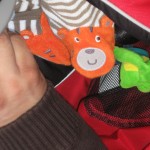
- Daniel properly dressed for Princeton with his orange tiger booties — read all bout it HERE
-
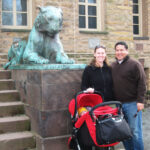
- Daniel, Malgosia & John (and the Princeton Tiger)
-
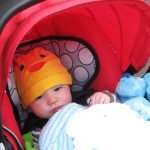
- Daniel — his first day at Princeton
-

- Lunch time!
-

- Burp!
-
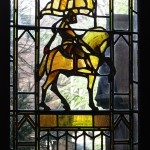
- Window at the Chancellor Green Library
-
- Double Poke in the Eye II, by Bruce Nauman Made in 1985, during his last foray into the medium of neon, Double Poke in the Eye II exemplifies Nauman’s signs from this period, in which figurative elements, mostly clowns and rudimentary silhouettes of men and women, predominate. The subject matter runs the gamut from love and cruelty, humor and tragedy to politically inflected current events such as torture, genocide, and war. This particular work is a variant of the platitude, “better than a poke in the eye [witha sharp stick].”
-
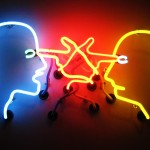
- Double Poke in the Eye II, by Bruce Nauman Made in 1985, during his last foray into the medium of neon, Double Poke in the Eye II exemplifies Nauman’s signs from this period, in which figurative elements, mostly clowns and rudimentary silhouettes of men and women, predominate. The subject matter runs the gamut from love and cruelty, humor and tragedy to politically inflected current events such as torture, genocide, and war. This particular work is a variant of the platitude, “better than a poke in the eye [witha sharp stick].”
-
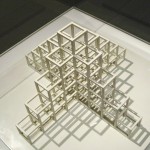
- Untitled, by Sol LeWitt Sol LeWitt was a pioneer of both Minimalism and Conceptualism, two key artistic developments of the 1960s and 1970s. Minimalism emphasized geometry and modularity, while Conceptualism privileged ideas over objects and process over product. Methodical, austere, and emotionally restrained, LeWitt’s sculptures generally consist of three-dimensional grids whose proportions are based on those of the smallest individual unit and whose overall configuration is deduced from pre-determined ratios and formulas. Such a technique was intended to relieve the artist from having to invent, compose, and express. Despite the complex mathematical calculations it entailed, this approach was too intuitive, absurd, and compulsive to merit the term logical. “Conceptual artists,” LeWitt wrote in 1969, “are mystics rather than rationalists. They leap to conclusions that logic cannot reach.”
-
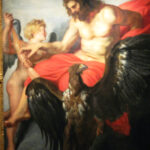
- Cupid Supplicating Jupiter (about 1611-15), by Peter Paul Rubens and studio In this scene from a second-century prose narrative, Venus’s son Cupid supplicates the king of the gods to allow him to wed Psyche, a mortal. Base on decorations in the Villa Farnesina in Rome (1518) by Raphael’s studio, this composition also gracefully displays the painter’s knowledge of antique monuments; the torso of Jupiter suggests the Belvedere torso in the Vatican Museums. The patron of this commission has not yet been identified, but the erudition and humor suggest that it was made for a courtly context.
-
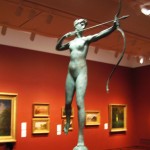
- Diana, by Augustus Saint-Gaudens Sixth in an edition of six bronzes cast between 1979 and 1987 from the half-size model for the statue of “Diana” commissioned in 1892 as a weathervane for the tower of Madison Square Garden.
-
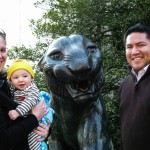
- Malgosia, Danile, the Princeton Tiger & John
-
-
The End; To Exit, enter the “Esc” Key
Return to the 2013 Album
or
Go Home
