Dear William, Daniel, Catherine, Michael (and Baby Girl Y) (and your parents), (and any future descendants and their parents),
I already spoke to you about Veterans Day when I wrote to you on November 12, 2012. At that time, I told you that I will tell you about my Mom, your Pra-Babcia Irene Kostro, some other time.
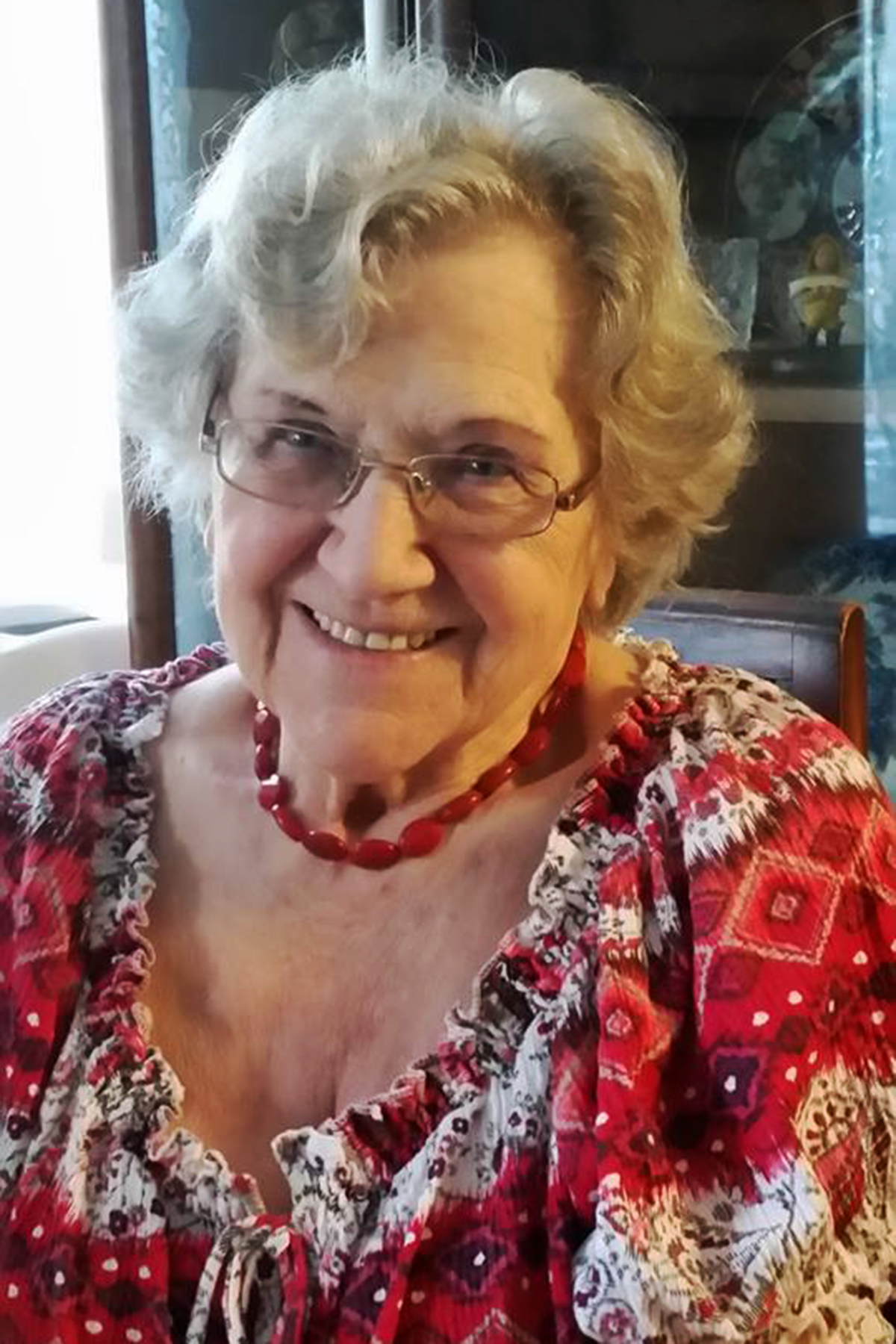
11/11/2015: Irene Kostro
Well, remember about the Book that I wrote — there I told you a bit about my Mom. So, let me quote the relevant portions of that Book for you (and add some relevant photos), so you learn my Mom’s story:
===========
[Starting on Page 51]
Since I have been talking to my Mom about her life story, maybe I should concentrate on her history first. I know that last year I made notes during my conversation with her on this topic. … .
These notes tell me that when Poland was invaded on September 1, 1939, my Mom, Irka, was a nineteen year old nursing student at a three year nursing school run by the Red Cross in Poznan. Her lifelong dream had been to be a missionary in Africa.
-
- In 2006, Babcia Krysia and I, with Mrek, Kelly, Malgosia & John, visited Poland for the first time. We traveled to get to know the places I grew-up hearing about, including Leszno.
-
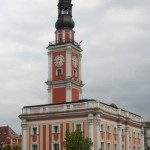
- Ratusz / City Hall in Leszno, Poland
-
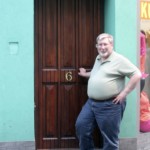
- The house where my Mother lived
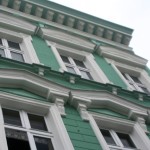
-
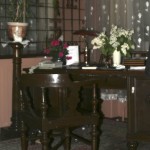
- My granfather’s desk
-
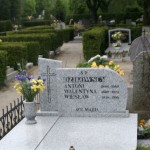
- Dzikowski family grave in Leszno
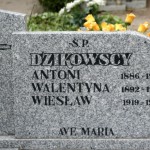
Dzikowski Family Tree
***Antoni Dzikowski (07 Jun 1886 – 09 Dec 1969) +
***Walentyna Wojciechowska (10 Jan 1892 – 02 Dec 1974).
1. Mieczyslaw (31 Dec 1913 – 05 Apr 2002) + Joanna.
2. Boleslaw (01 Oct 1915 – 11 Apr 2000) + Letitia Kathleen O’Malley + Kira Paladino
__a. Michael + Angela De Guzman
__….A. Michael + Carrie Donato
__….B. James + Stephenie Kaesshaefer
__….C. Dana + Vincent Gatto
__b. Pauline + Robert Barry
__….A. Ian
__….B. Highland
__c. Kathleen + Stuart Walton
__….A. Colin
__….B. Rowan.
3. Janusz (1917 – 1917).
4. Irene (01 Dec 1919 – ) + George Kostro (18 Jun 1923 – 11 Jul 1984)
__a. Paul + Krysia Neumann
__….A. Mark + Kelly Ladd
__….B. Richard + Stephanie Sanok
__….C. Margaret + John Sasieta
__b. Thomas + Patricia Brody
__….A. Zachary
__….B. Katrina
__….C. Cody
__c. Alexandra + Nicholas Philippas
__d. Anna (+ Peter Plostins)
__e. Elizabeth + Alfered Hirsch.
5. ***Wieslaw (01 Dec 1919 – 03 Mar 1998) + Olenka + Elzbieta
__a. Ewa + Maciej Julski
__….A. Viktoria.
6. Jolanta (01 Jul 1923 – 30 Jun 2006) + Wlodzimierz Stegawski (12 Jul 1915 – 05 Nov 1967)
__a. Lidia + Marian “Dzidek” Tymowski
__….A. Martin + Kasia Zagorska
__….B. Michele
__b. Kamila + Juliusz Bittner
__….A. Joanna + Kajetan Fiedorowicz
__……..1. Kayah
__……..2. Borys
__c. Alicja + Stanislaw Szymczak
__….A. Marek Stegawski + Magdalena
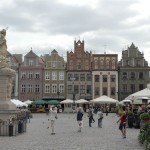
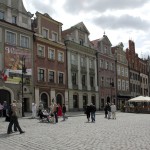
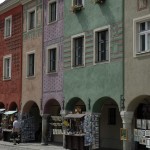
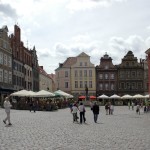
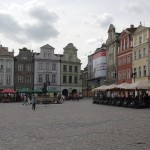
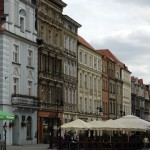
Although her family had retail stores in Leszno and in Poznan, in 1939 she resided in a student dormitory close to Rynek in Poznan. The store in Poznan, was a women’s clothing and fur store; while the building in Leszno had tenants on the second floor, and a store on the street level where they sold clothing and cloth. Just a day before the beginning of the war, Mom’s father bought a house in Lublin, where, in anticipation of the war, all the cloth was sent; however, it never arrived – apparently it was stolen at the train station.
-
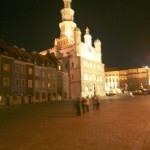
- Rynek, Poznan
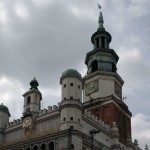
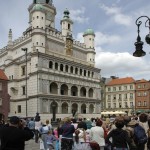
-
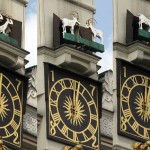
- City Hall Clock in Poznan
-
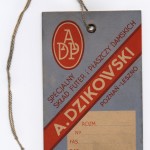
- Tag from my Grandfather’s (Antoni Dzikowski) store APD — Antoni P DzikowskiSpecjalny Sklad Futer in Plaszczy Damskich — Furs and women’s coats specialty store A. Dzikowski Poznan – Leszno Rozm. — Size No.FASGat. — Quality
-
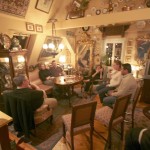
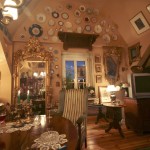
- Kama’s apartment — Kelly, Marek, Krysia (speaking by telephone to Babcia Kostro in NY), Malgosia & John
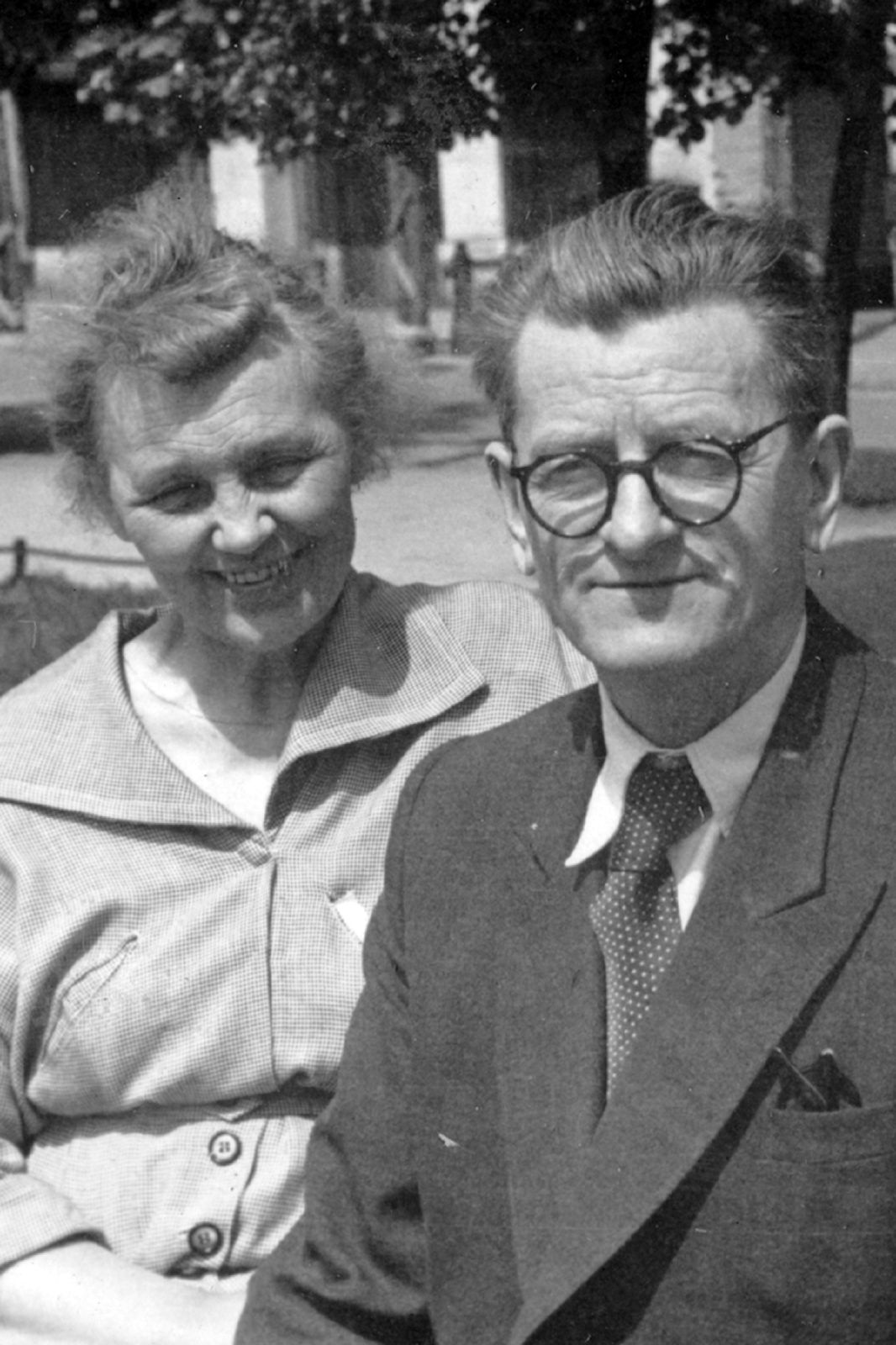
13 June 1954: My Grandparents, Walentyna Dzikowska & Antoni Dzikowski
Earlier, Mom’s Father had a men’s clothing store in Gostyn; but once he married and my grandparents had children, the family moved from Gostyn to Leszno. Mom’s mother (my Grandmother Walentyna) was the person who ran the stores, dealt with clients and salesman; my Grandfather Antoni, on the other hand, was the family bureaucrat – he dealt with accounting and finances; he also was constantly remodeling the store – everyone joked that he should have been an architect.
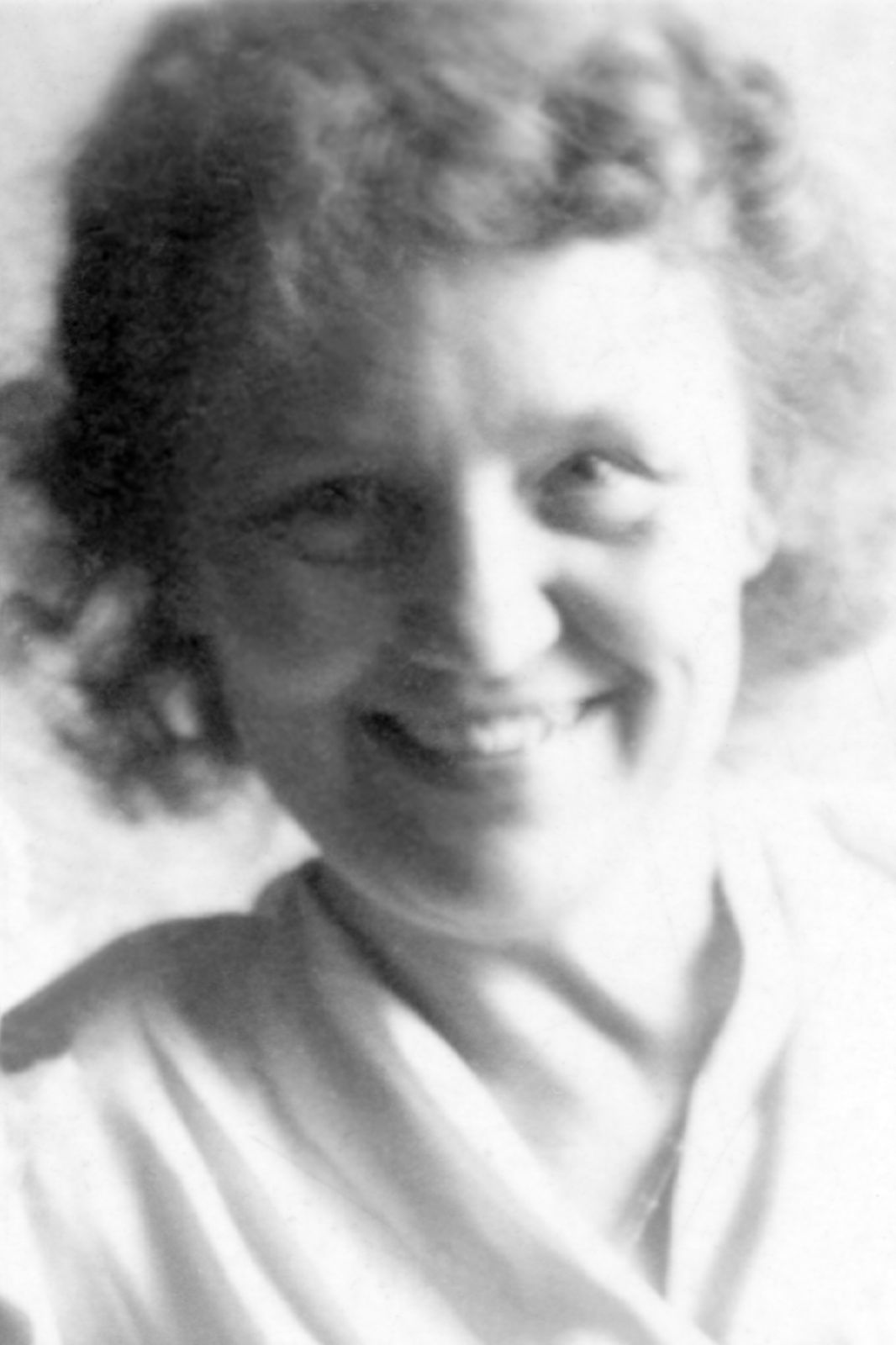
July 1945: My Grandmother Walentyna Dzikowska nee Wojciechowska
Grandfather Antoni came from a very poor background – his father died when Antoni was seven; and after that, his Mother maintained the family by selling fruits and food at town fairs.
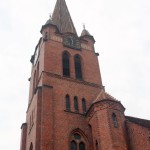
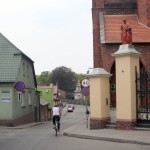
Grandmother Walentyna, on the other hand, was better off economically; but, she wanted to get married and get out of the house as soon as possible because she did not get along with her step-mother. Walentyna’s father, Alojzy Wojciechowski, was the church organ-player in Smigiel, where he also taught piano and violin, and had a small shop selling religious items. His wife, Skornicka, died young, of kidney failure. At the time of her mother’s death, Walentyna was sixteen – she had three brothers; and two sisters (Mietek, Wlodek, Czeslaw, Edmund (he later moved to Czestochowa), Zosia and Stefcia (who later became a nun).
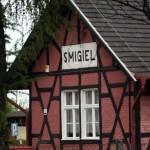
-
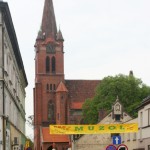
- Pre-WW2, my great-Grandfather, Alojzy Wojciechowski, was the organ player in this church.
-
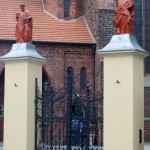
- Kosciol p.w. Wniebowziecia Najswietszej Marii Panny — Gate to R.C. Church in Smigiel, Poland
To help take care of the kids, Alojzy married one of Skornicka’s sisters – with whom he had four more children: Stach (who became a director at a school for the deaf); Wladzia and Marylka (who sang very beautifully); and Leon.
Anyway – a few days after the start of the war, the entire nursing school volunteered for action, and then was evacuated by train to Warszawa. Irka left her family, which also escaped from Poznan to eastern Poland.
During her train trip, Irka was on guard duty from 4 a.m. to 6 a.m. After her watch ended, there was an air raid, and her train was bombed by the German air force. During the air raid, most people escaped into the surrounding fields. Irka and several other nurses, believing that the bombs were likely to hit the area surrounding the train, decided to stay put. However, after the air raid, they saw that the train car in front of theirs and the one behind theirs had been completely bombed out. Irka and two others gathered their luggage and documents, and decided to hitchhike to Warszawa. Most of this hitchhiking was done at night to avoid air raids.
Along the way, Irka tripped on some cobblestones and hurt her knee. Nonetheless, she eventually made it to Ozarew, close to Warszawa. From there, Irka saw the sky illuminated by the burning building-fires in Warszawa.
Irka was determined to get to Warszawa. She was leading; her two companions were following. At times they heard heavy gunfire. After midnight, around 2 a.m., flares were shot up into the sky. They had to hide in a ditch by the road. By dawn (5 a.m.) She was very tired, her knee hurt very much, and she lost her companions.
All alone, she heard German sounds. She was found by a German soldier with a rifle. She did not have the strength to stand up. He took her into camp (she was very surprised that the Germans were so close to Warszawa already). He then ordered her to go into the field, but fearing that he would shoot her, she refused. Then, another tall blond soldier calmed him down. Her skirt then rode up and they saw that she was injured. The Germans found a translator, and in response to their inquisition, she told them that she was a nurse, on the way to Warszawa.
The soldiers took her to where the machine guns were. It was so loud when they were firing, but she was so tired that she fell asleep. When she woke up, at noon, there was much activity around her. A German office interrogated her again, and again he told her to go down the road, but again she refused. Later, some Polish woman came to Mom and told her to pretend to be severely injured.
Later, Irka was taken to an abandoned farmhouse with many injured Polish soldiers. This was the first time she saw so many injured soldiers. There, she received some water, which revived her. Shortly after that, Irka started treating the injured. It was a very small farmhouse, and there was too many injured to fit inside; some had to be outside. It rained all night, and by morning many of the injured had died. While at this farm house, all they had to eat was water from a well, and dried out bread. After two or three days, a German army truck took Irka and the other injured to Pruszkow, where a mental institution was converted into an emergency care hospital.
Because the well water caused Irka to suffer digestive problems, and because she was exhausted from the treatment of the injured, she was assigned to what was considered lighter duty at the mental ward of the hospital. There, she was assisted by an obsessive-compulsive chemist. In the hospital, there were three categories of patients. She remembers one patient: she was an actor with long hair, always playing her role. Another was a lawyer – he would stand on tables and give very passionate speeches. Yet another was a ten year old, pretending to be Shirley Temple. The worst patients were bound; they were making accusations that they had been raped.
After Warsaw fell, the German forces consolidated their control.
Within a few weeks, when trains started running again; Irka and two men (an engineer and a student), decided to return to Poznan. The trip was difficult because the bridge across the Warta River had been destroyed.
When she finally arrive in Poznan, she went to her parents’ place on Stary Rynek. The store was open; all the employees were happy to see her because she was the first family member to return, and this was the last day to register the building and store with the German authorities as private property. Within a few days, the family reunited. When the Germans attacked, the family had separated in order to maximize the likelihood that at least someone would survive. Irka’s mother and sister, Jola, had traveled to Lublin. Irka’s father and twin brother, Wiesiek, had traveled in a different direction. (Irka’s brother Bolek was at sea in the Merchant Marines; and her brother Mietek was a priest in a monastery.)
-
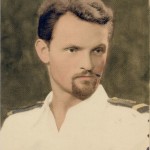
- Boleslaw Dzikowski (in the Navy) In 1938, Wojcio Bolek graduated as an officer from the Polish Merchant Marine Academy in Gdynia. After graduation, he worked on a British ship. When WWII started, the Polish Navy joined the British Navy. During the war, he transported food and munitions for the British Navy. After the war, he did not return to Poland because he did not want to submit to Russian rule; and then he immigrated to America.
-
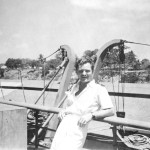
- Wojcio Bolek Dzikowski (Polish Merchant Marine, in the British Navy)
-
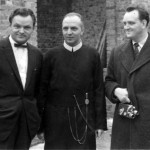
- Three brothers: Bolek, Mietek & Wiesiek Dzikowski
At the beginning of October 1939, Irka visited her uncle, Antoni Skornicki, who was a priest and under house arrest in Leszno – he later died in Dachau.
However, soon thereafter, the Germans began their program of resettlement. About a week and a half before Christmas, in 1939, the German soldiers came to evict everyone from Stary Rynek. At that time, Irka’s mother was at her sister’s house in Poznan. Wiesiek hid in the attic, and was not found by the German soldiers that searched the house (he later notified his Mom that the house had been taken; for her not to return there). Irka, Jola and their Dad were taken out, and together with others, were marched to some barracks where they slept on straw for a few days. Then, they were marched to the train station and loaded onto a train. Also evicted from the house was Irka’ s uncle (her mother’ s brother) who had been living with them – because he appeared to be Jewish, he was separated from them. The house was locked up, and sealed, awaiting its new tenants – Volksdeutsche (people who descended from Germans and had a German surname) from northern Poland.
Irka and others were packed on the train like sardines. No one knew where they were being taken – rumors were that they were being taken to Siberia in Russia. After several days, they were ordered off the train in Jaroslaw. As they were marched through the streets, Irka heard her name called from the side of the road – to her surprise, she had been recognized by an old high school friend who had moved to Jaroslaw some years earlier.
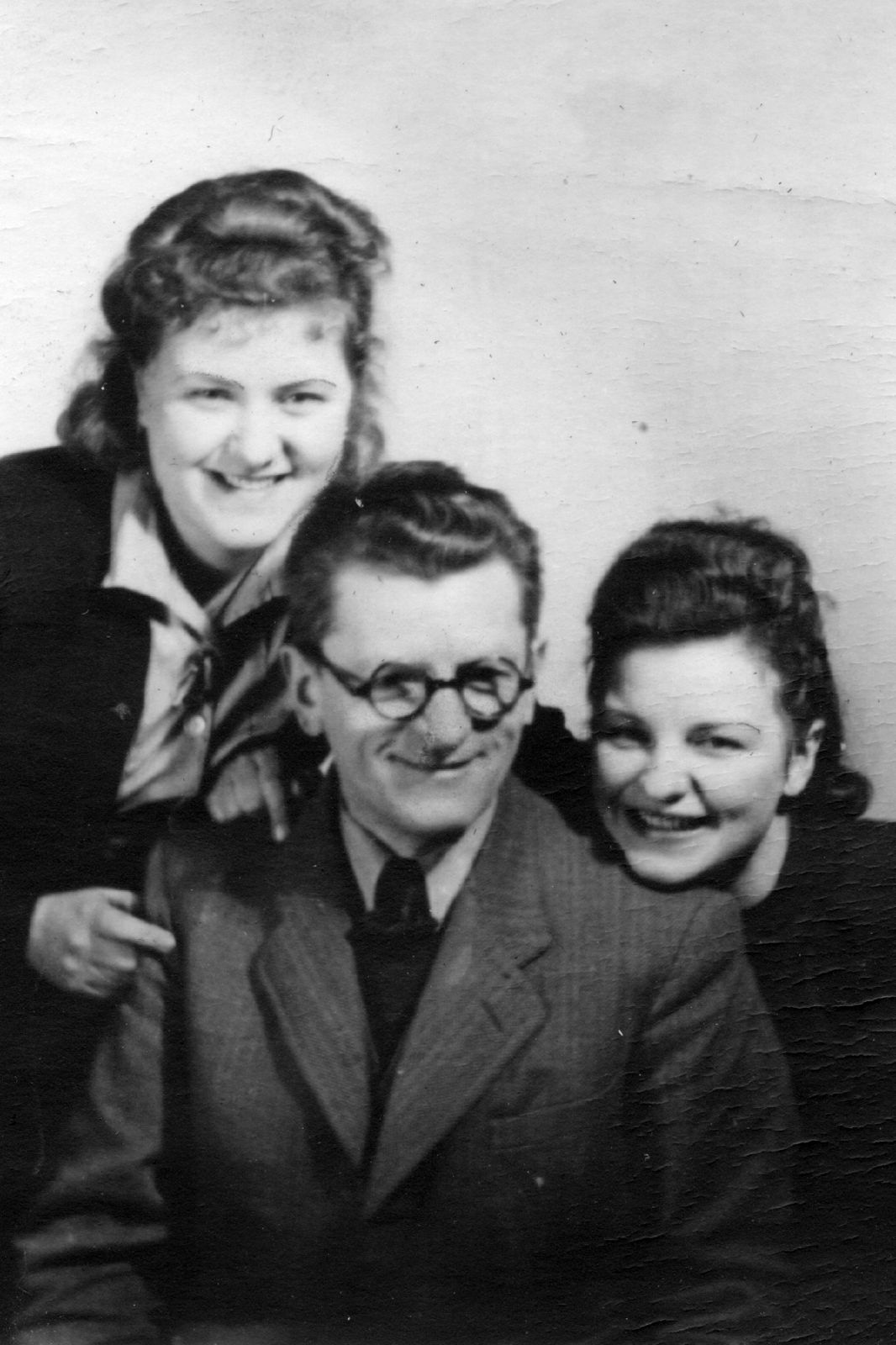
My Mom, my Dziadek Antoni & my Ciocia Jola
At her old friend’s invitation, Irka, Jola and their Dad, and also two couples they befriended during their ordeal on the train, separated from their German captors and went to live at Irka’s friend’s house, where they slept in one small room on the floor.
One or two days before Christmas, Irka and Jola learned of a Red Cross facility in Jaroslaw where they could get some help. Despite the bitter cold and heavy snow, they decided to go and register there that night. The following day, a young man came to their house and brought them bread, butter and Babki made for them by the locals. This was such a nice gift from heaven. The next day, they went to Church and sang Christmas Carols in gratitude.
Before their eviction from Poznan, but in anticipation of such an event, the family had agreed that those who survived would reunite in Czestochowa, where Irka’s uncle, her mother’s brother, had a clothing store. In accordance with this plan, Irka, Jola and their father traveled at night from Jaroslaw to Czestochowa. The first part of the trip was by train; but in the vicinity of Sandomierz, the bridge had been destroyed, so they had to continue by sleigh. It was a crystal clear night, with beautiful stars and a full moon. They had furs, but their faces were exposed to the cold wind – they suffered severe frostbite. When they reached an operating train line, they resumed their journey by train.
As had been agreed, they met Irka’s mother in Czestochowa. From there they traveled to Warszawa, where Irka’s Mom had rented a small place in a factory building. Wiesiek got the best place – he slept in a closet, and the back wall from the closet was close to a stove, so he was warm. Irka and Jola slept in one small bed – it was so tight that when one of them wanted to shift, they had to coordinate, and both had to shift or tum over together.
Across the street form where Irka and her family lived there was a place that distributed food ration cards. These ration cards entitled the holder to purchase meet, once a week; bread, once a day; etc. The person supervising this operation fell in love with Irka; consequently, he was always super-eager to help as much as possible. He gave them his brother’s ration card, because his brother was out of town. Whenever he had anything extra, he gave it to them. However, he was one of those super-sweet kind of individuals, always speaking in the sweetest of voices, kissing hands constantly – all of which turned Irka off.
Irka’s mother, on the other hand, was very impressed with Irka’s new friend, and encouraged the friendship. But Irka had no interest – once, when they were alone, this fellow wanted to kiss Irka, but she realized what was about to happen, and escaped; they wound up chasing each other around the table, until he finally gave up. He complained to Irka’s mother about the lack of affection he was receiving – she tried to explain that Irka always wanted to be a nun; that he should be patient; that maybe she will come around some day – this did not happen.
The owners of the factory were Jews. When they were deported by the Nazis into the Ghetto, Irka and her family had to move. They moved into a place on Senatorska Street, that had been the offices of doctor that specialized in sexually transmitted diseases (Gonorrhea, Syphilis, etc.). Then they had to move again, to a fifth floor walk-up; where there was no heat, and it was very cold. Their only source of heat was whatever newspapers they could collect and burn, and the burning of any leftover food scraps – absolutely everything was used, nothing was thrown out. Everyone slept in their clothes and any furs that they had. In the mornings, the ice would be chipped off the walls and the floor; and clothes that had been washed would have to be thawed out so they could dry – this was usually a multi-day process. Living with them was another family, and a Volksdeutsche woman who was married to a Jew – the Nazis had taken her husband and her son to the Ghetto.
Then they moved again, this time to Long (Dluga) Street, where they lived in a small apartment in the attic. Here, Irka’s mom organized a sowing business. She took orders for quantities of finished clothing goods, purchased materials, and hired seamstresses who worked out of their houses making the required clothes. Irka was made in charge of making sure that the seamstresses resided where they claimed to do so, and kept in touch with them to keep production going at a steady rate – this way, Irka got to travel throughout Warszawa, and got to know the city very well.
Toward the end of 1941, Irka had another “adventure.” Irka was dispatched across the Wisla River to the Praga neighborhood, to meet with a seamstress. That day, a German officer had been assassinated; and there was much tension in the community. The curfew was unexpectedly changed from 8 p.m. to 6 p.m. As Irka was walking back home, approaching the bridge that crossed the Wisla river, she noticed that the streets suddenly became quiet and there were no Polish people outside. The only ones walking around were groups of German soldiers, either on assignments or on leave.
Irka felt the need to get back home so she kept her blond haired head high and walked assuredly. Soldiers stared at her, but no one stopped her – they must have figured that she was German, because no Pole would be so brash as to walk in their midst past curfew. As Irka was approaching the bridge, she saw a horse drawn carriage taxi pull up to her. The driver asked her where she was going; when she explained that she needed to get across the bridge to get home, he told her to get in. Irka thanked him, but declined because she had no money to pay the fare. He replied that he was going that way anyway, and since it was past curfew, he would not charge her anything. Irka thanked him, and got in. For safety’s sake, she turned her watch back fifteen minutes, so if they did get stopped, she could show that according to her watch she still had time.
The bridge was guarded by a sentry at the beginning, a sentry in the middle of the bridge, and a sentry at the end – to get through, they had to pass through three check points. They crossed the first guard post without incident. The driver was very worried about the middle guard post, but Irka concealed herself low in the carriage, and they passed without incident. The third post appeared to be unguarded, so they anticipated easy passage – suddenly, as they entered to Royal Square, the command was heard: Halt! Halt!! The carriage driver pulled over to the side of the road, and Irka got out. The German guard was yelling at her; she did not understand most of his antics; but in her broken German, Irka tried to explain that according to her watch, she still had time. When she showed her watch to the guard, she noticed that the watch had stopped at 5:50. She continued to apologize profusely; he kept on yelling. Then suddenly, he told he to get out of there. She promptly got back into the carriage, and left.
Back home, the whole neighborhood knew that she was missing. When she arrived, she knocked at the front gate to be let into the building. In reply to the inquiry “Who is it?” she announced herself – the shutters in many windows of the surrounding buildings opened, and she was welcomed back warmly; but her Mom yelled at her, for being so foolish and violating curfew. She should have stayed at the seamstresses house. This was so dangerous!
People who were caught violating curfew would routinely be sent off to work camps, or worse.
-
- 1943: My Mother and her sister, Jola
-
- 1943: My Mother and her sister, Jola
-
- February 1943: Mom
The next year was spent working, hoping for better times, and playing bridge. Irka then tried to join the Nursing School in Warszawa. Unknown to Irka, the Director of the School was of the opinion that nurses must be dedicated to their profession, could not color their hair or wear any makeup, and had to look plain as to not tempt their patients. At this time, Irka had long blond curly hair. She went for meeting with the School Director, wearing a beret, with a lock of her hair hanging off to the side of her face, and darkened eyebrows. The Director was scandalized; and told Irka that in her opinion she certainly did not qualify to be a nurse; however, she would consult with her counterpart in Poznan about Irka’s character.
Irka got a very good reference – how dedicated she was, and how well she studied. Based on this reference, the Director decided that what she heard was “heaven” and what she saw was “hell.” In her opinion, anyone who could change so drastically in such a short amount of time is completely untrustworthy, and should never be allowed into the nursing profession. Irka was devastated.
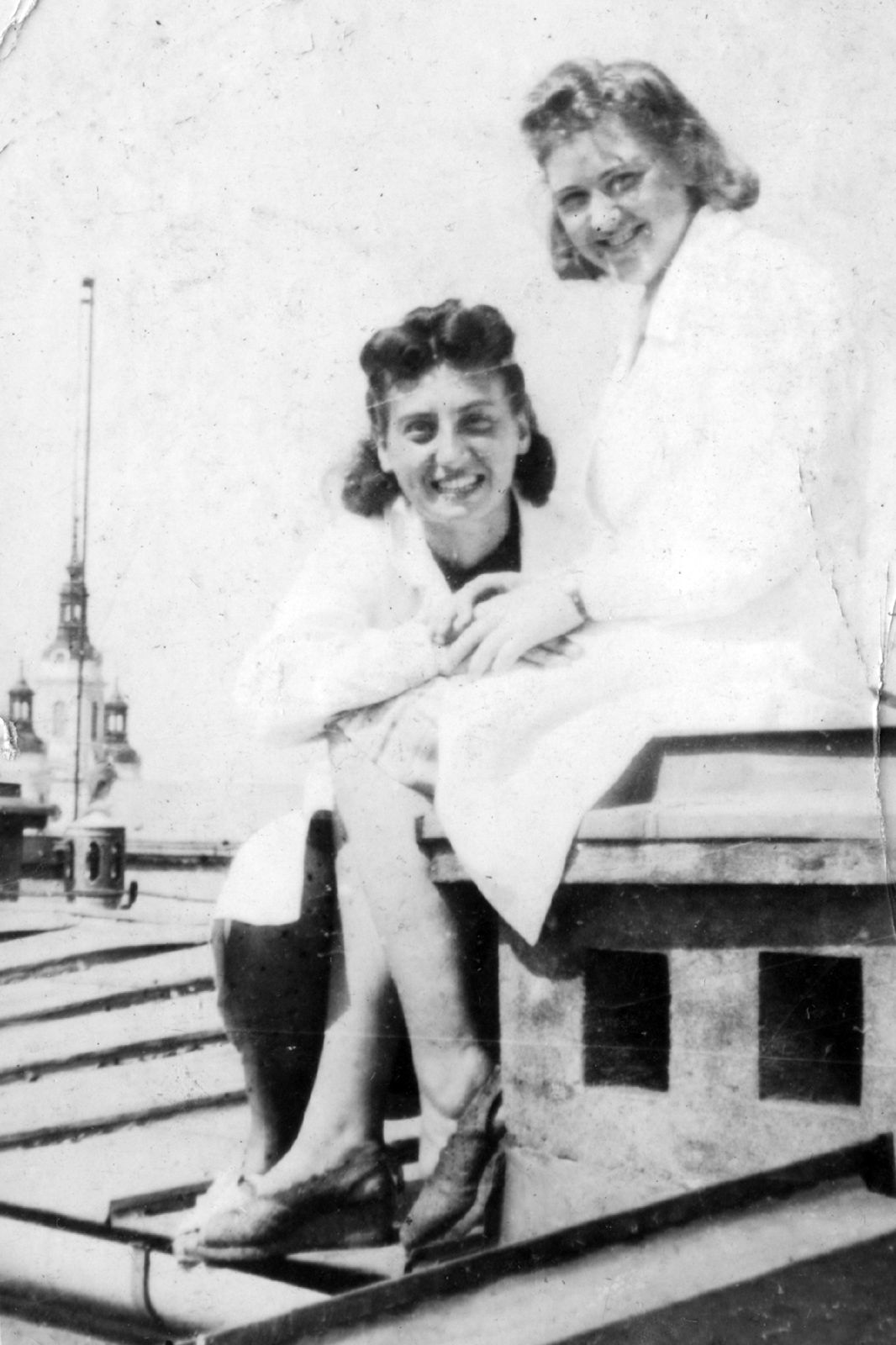
August 1942: Mom & her friend, Lunia Komornicka, … on the hospital roof, taking a break while working at Radomsko, Poland (close to Czestochowa)
In time, Irka’s mother’s doctor recommended that Irka forget about nursing, and become a doctor instead. Irka resisted – she felt that she was not smart enough. But then, since she was declared not suited for nursing, she decided to pursue her medical career in medical school. Medical Schools were prohibited by the occupying German forces – officially, the school was called Dr. Jan Zaorski’s Private Vocational School for Auxiliary Medical Personnel [Prywatna Zawodowa Szkola dla Pomocniczego Personelu Medycznego] (the name, not denoting its university character, was supposed to mislead the Germans). It was staffed by all the professors from the pre-war medical university. Irka attended from 1942 until 1944, when her medical studies were interrupted again, this time by the Warsaw Uprising.
[Starting on Page 12]
Tell me about your “AK” experience. – It was very secret. I remember telling a fellow student of my desire to join; she told me that she will arrange it. I was then notified to attend a meeting at a secret location, where I did not know anyone. There was more than one meeting that I attended; there I learned how to load and take care of a gun, and how to engage in urban warfare.
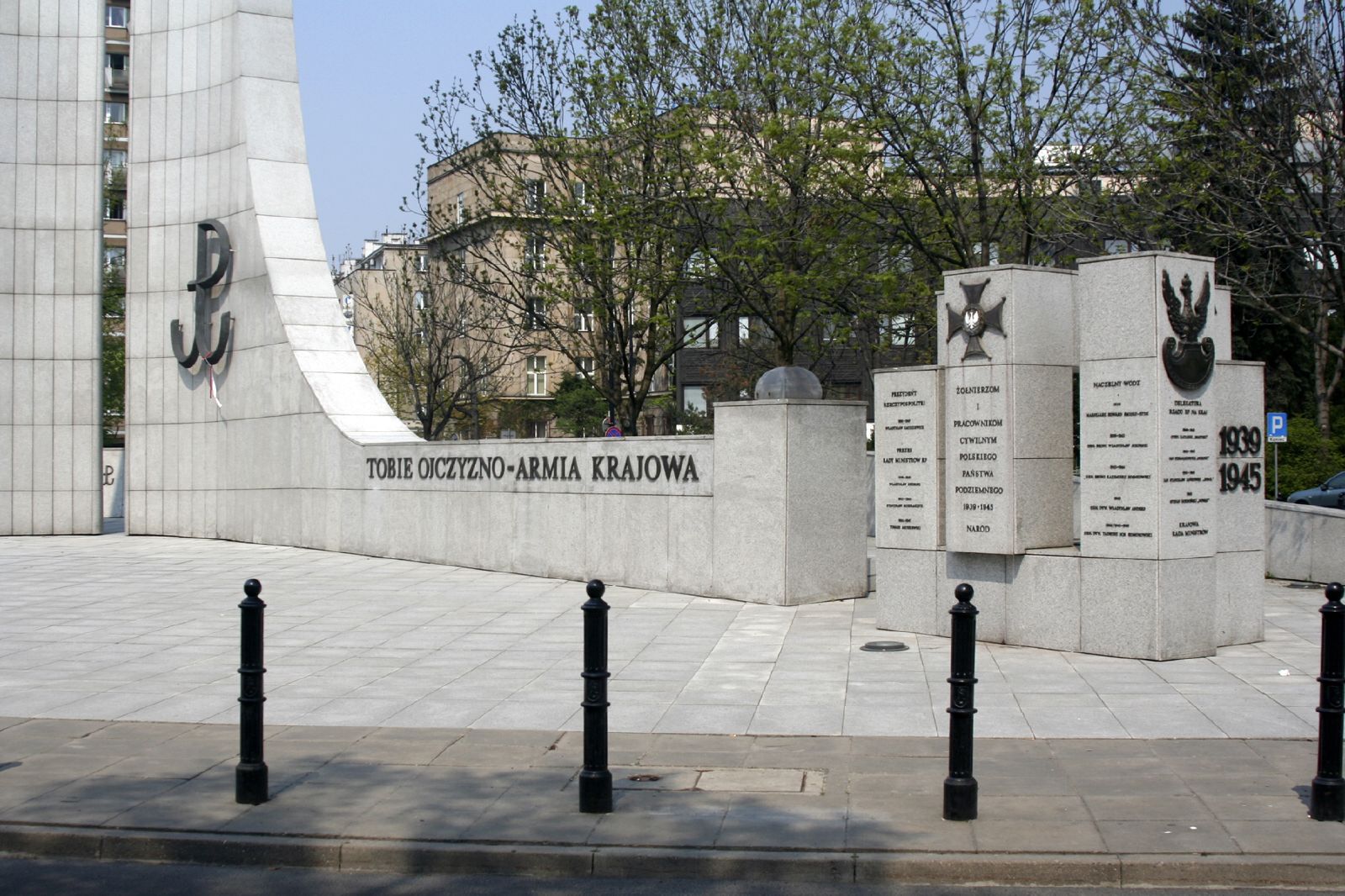
World War II Monument in Warszawa, dedicated in part to Armia Krajowa “AK”
Were you ever involved in any operations? – Once; it still makes me sick to think about it; although, I think that they were just testing me, to see how I would react. I was notified that I and another women would be assigned to be the supporting medical staff to an assassination mission involving a German official. I did not know my counterpart, nor where it would happen. All I was told was that I needed to report to a safe-house, with a stretcher, from where I would be detailed to the proper location. I obtained a stretcher from the hospital and brought it with me by taxi to my assigned location. From there, I was told to go to a specific gate and wait; and, if needed, to be ready to support my fellow soldiers should anyone be injured. I was so scared. I was not able to sleep that entire night, waiting for the event. However, around noon, while I was waiting for the assassination to be carried out, I was relieved of my post and I was told that the assassination was canceled.
[Starting on Page 11]
Before the war I was a nursing student; and after the war broke out on September I, 1939, I joined the “AK” (Polish Home [Underground] Army) in 1943. When the Warsaw Uprising started, I was taking care of my twin brother who had been shot in the neck just a day earlier. We were in the hospital where I had been working as an operating room nurse, and where I was assigned to take care of patients, changing their bandages and caring for their wounds.
… . Toward the end of July, 1944, rumors were everywhere about the impending uprising against the German occupying forces. In Warszawa, I was located in the Old Town, where I was preparing for the Uprising by making bandages and gathering syringes to take care of the injured that we were anticipating very soon.
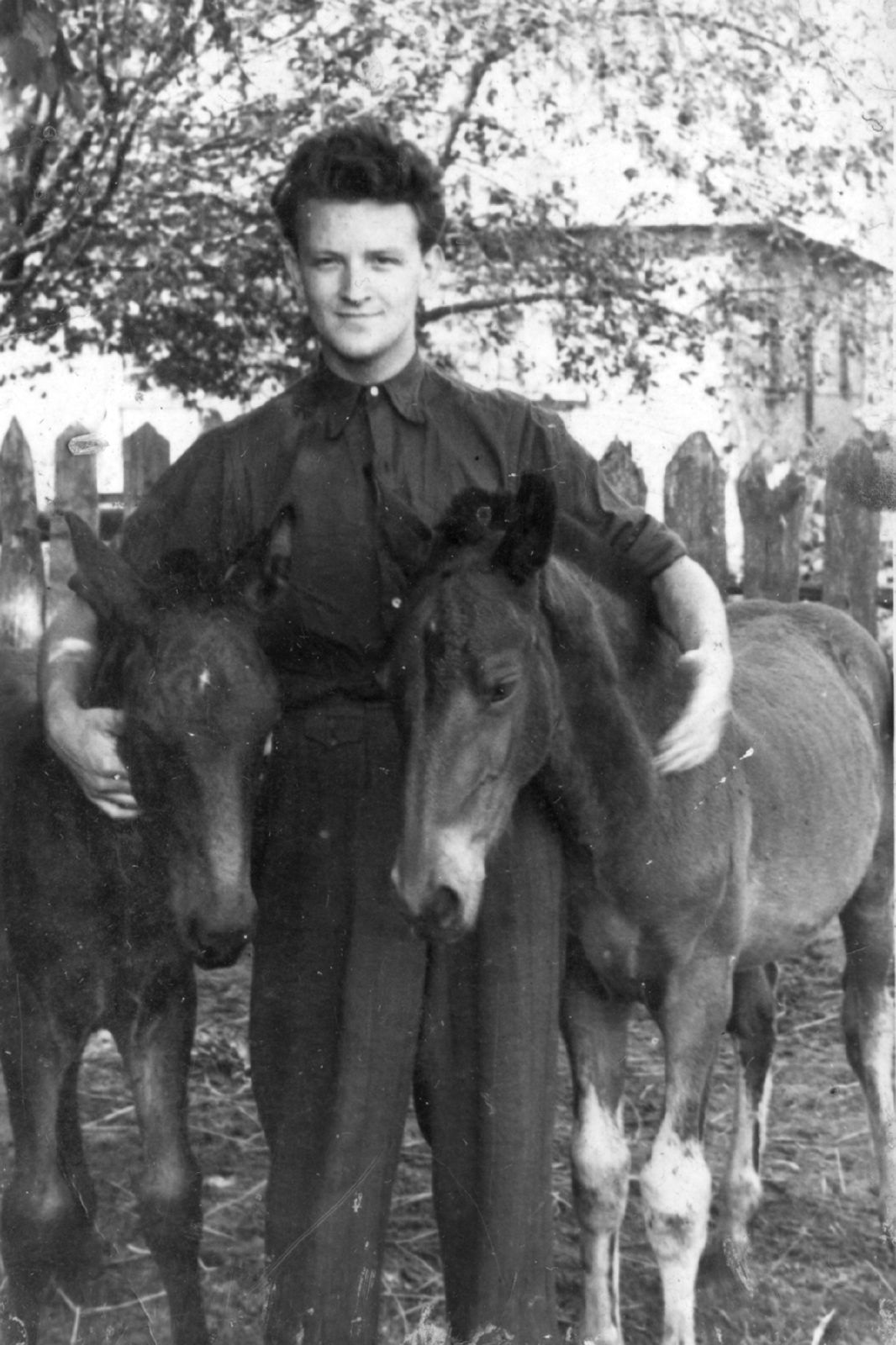
Circa 1943: Wojcio Wiesiek …. as an itinerant photographer, travelled the countryside, taking mostly portraits of people for their identity cards.
On the last day of July, my brother Wiesiek and I were in the courtyard of our building when a passing German soldier sprayed the area with machine gun fire. No one was hit directly, but one of the bullets ricocheted and hit Wiesiek in the neck, grazing his carotid artery. The artery ballooned tremendously, but it did not burst. I managed to get him to a hospital, where I stayed to take care of him.
The next morning, the Warsaw Uprising began early in the morning. We had expected the advancing Russian Army to come to our aid after a few days. However, the Russian Army reached the Wisla River, and stopped there. We fought for sixty three days, but the Russians just sat there and watched us from across the river.
In the hospital, in addition to caring for Wiesiek, I began caring for other patients as well. Initially I was utilized as a general nurse, traveling from home to home, where our injured soldiers were being laid out. I was responsible for changing their bandages and tending to their wounds.
When the German air force started to systematically bomb the city, block after block, we moved the injured to the basement of the hospital, where they were laid out on mattresses on the floor. But then, the operating room that had been on the ground floor was bombed also, so we had to move what remained of it to the basement as well.
Toward the end of August, our operating room nurse was shot in the knee while she was crossing the street under the cover of a barricade; she was bringing sterilized operating tools, which had to be sterilized at a different hospital because we did not have adequate facilities for that. When she became incapacitated, I was assigned as the nurse in the operating room. My job was to hand the appropriate instruments to the doctor during operations.
When we lost the fight and the Uprising was crushed at the end of September 1944, the Germans transported us, the entire hospital, patients and staff, to a Prisoner of War camp. Then, in early December, 1944, the Germans decided that many of the patients were well enough to take care of themselves, so they separated us. I, together with many of the other women, were transported to Oberlangen, where I remained until we were liberated by the Polish First Armoured Division in April 1945.
-
- Mom with officers and friends, Jadzia, ? and Zosia Wolff.
-
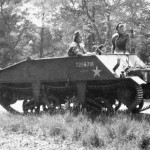
- May 1945: In Germany, after being liberated from Oberlangen by the Polish First Armoured Division in April 1945.
-
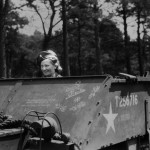
- Jadzia [Comment from Tom: Is this coincidence? Did someone in the Polish army have a crush on Mom? Or … was our Mom a graffiti artist at heart?]
-
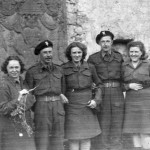
- July 1945: Red Cross
-
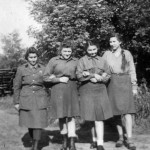
- July 1945: Red Cross
[Starting on Page 21]
I tell Mom that I want to get more details about her life for my book – she does not seem to mind. I tell her that I did some research on the internet about Oberlangen, and I was wondering what did she do once she was liberated? Mom’s answer was not short:
After we were released from Oberlangen, we had nowhere to go, but our mood improved tremendously – we were happy to be free; we enjoyed better food; and we were hoping for the quick end to the war. When the opportunity presented itself, I volunteered to work at the Red Cross Headquarters, somewhere in Bavaria. At first I was assigned to the distribution of clothes detail; but after a few days, I learned that they needed people to help with the distribution of medications. I quickly transferred to that detail, where I worked with another fellow medical student, Ryszard Niklewicz.
One day, I was called to report to Colonel Misiak, the Director of the Red Cross Headquarters. It turned out that he was also from my hometown, Leszno. His parents, like my parents, had a store on the Town Square.
Some time later, my friend, Ryszard Niklewicz, told me that the Polish Army in exile had opened Polish Student Centers in Edinburgh, England and in Brussels, Belgium, for the purpose of allowing student to continue their studies. I decided to go to Brussels to continue my medical studies – apparently, scholarships would be available for qualified students.
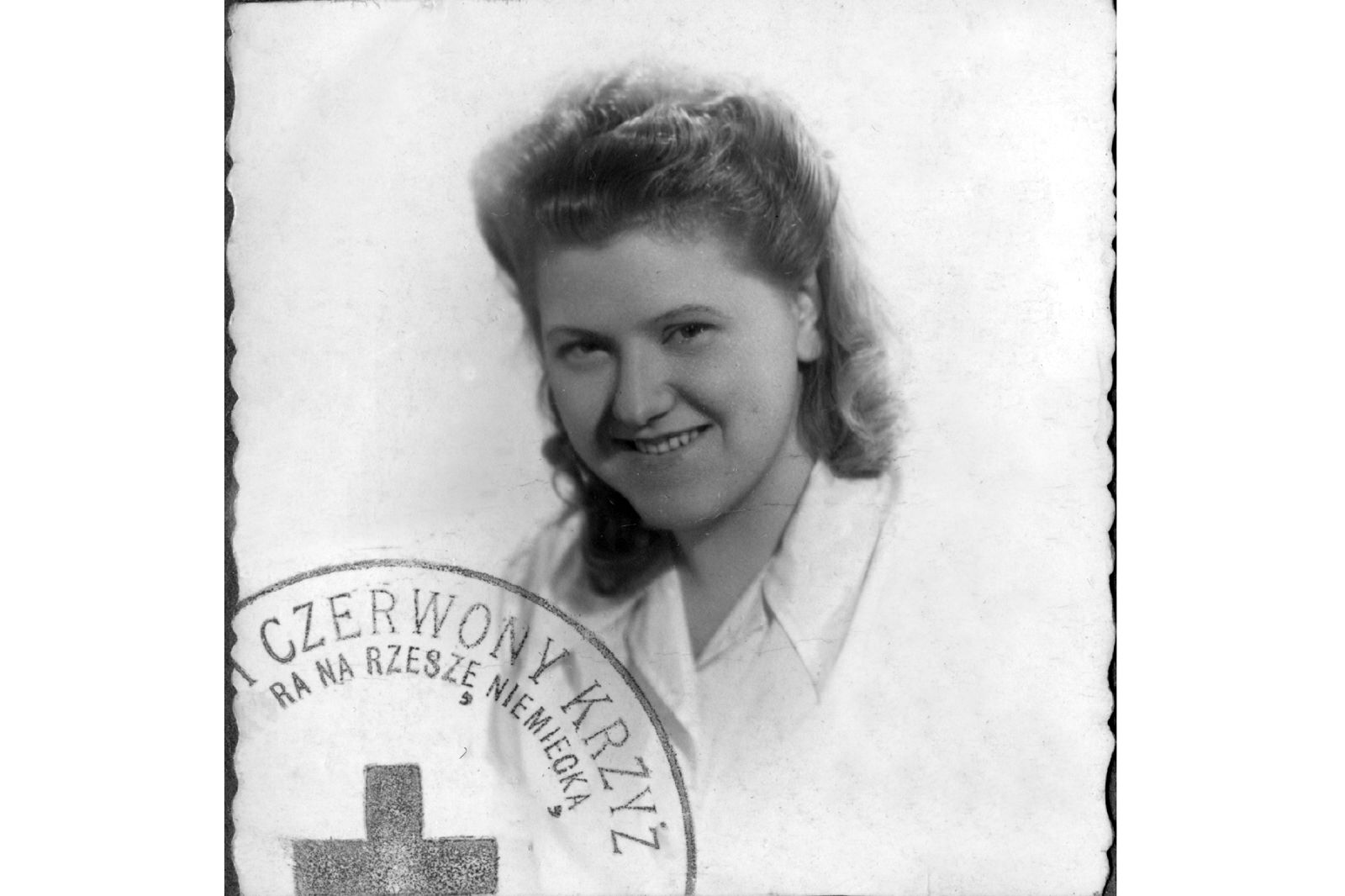
May 1944: Mom
I promptly approached Colonel Misiak and obtained his permission to go to Brussels. He gave me a piece of paper on which he wrote his official authorization. To join a convoy that was going to Brussels I had to take a train to some town in Germany, and try to meet up with the convoy that was supposed to go through that town at 6 a.m. That night, as I was sleeping, something bit me in the leg, in the area of my knee – I just swept it away (whatever it was), went back to sleep, and did not think about it again.
I arrived at my destination in time, and waited there for three hours – however, the convoy never came. I had no money, and I did not speak German or English – I did not know what to do. But then, I met two soldiers who were also going to Brussels. They told me that a military train with English soldiers would stop at the train station at nine that night, going to Brussels and Paris. However, I had to get there before eight, because the station would close at that time.
When I arrived at approximately 7:30 p.m., the station was brimming with military personnel. There, I blended into the crowd, and was fortunate to meet two older, experienced soldiers, who told me to hide behind a wood pile until the train arrived. The military police, with rifles, were patrolling the station, so I had to be careful not to attract their attention. While I hid, one of my new friends went to explore the station; when he returned, he told me that there was a group of five or six women all the way up front; and I had to somehow join them if I wanted to get on the train.
I waited for the military policeman to start his patrol in the direction that I wanted to go, and once he started, I followed him, off to his side, staying behind him so he would not see me. This way I was able to get to the group of English women. I stayed close to them, but did not make direct contact with them. Once the train arrived, they climbed on board, and I followed them in. They started to set up their bedding for the overnight trip, and I promptly did the same and quickly pretended to go to sleep.
At approximately midnight, the train stopped and everyone got off. I got off also, as I did not know what would happen next. It turned out that this was a dinner stop. There were long tables with benches, where we were given wonderful sandwiches. I was so scared that I would be found out, but no one asked me for any identification papers. In my very broken English I became friendly with my female companions, and I told them that I had a brother in Edinburgh. It turned out that one of them was from Edinburgh, and she actually knew my brother Bolek. After that, they took good care of me.
I arrived in Brussels in September 1945, in time to enroll in school.
My next adventure was getting off the train and getting out of the train station. I was dressed in a Polish soldier’s uniform (the pants, converted by a tailor into a skirt). On my shoulders I had Red Cross insignias. The only identification I had was the handwritten authorization from Colonel Misiak, authorizing me to represent the Red Cross in Brussels.
I was very afraid that I would be caught as an impostor, riding military trains without proper authority. As I was approaching the gate out of the train station, I stayed in the middle of the crowd being formed by a narrow passage, and I had my handwritten identification in my hand. Fortunately a commotion started because someone else did not have proper papers with him. During that commotion, I was waived on to pass – I was finally free!!!
I wandered around, finding a beautiful park. Surrounding the park there were these beautiful building and hotels – I could not believe my eyes. For the past several years all I saw was total destruction, and here I was, in the most beautiful place on earth. I felt I was in a fantasy world.
Soon, though, reality set in. I had almost no money and I had difficulties with French and English. Fortunately, I had my stash with me – after we were liberated, we were paid by the Red Cross in cigarettes and very little money. I had the good stuff: Chesterfield and Camel cigarettes. They were very valuable. I decided to sell them, but I could not do it in public, as it was illegal to do so. But first, I needed to try to arrange for some lodging. I remembered that I had been told that there was a possibility for free lodging if I was in an official capacity.
I found the office that handled such matters, and reported in with my handwritten authorization from Colonel Misiak. I told them that I was in Brussels on official business for the Red Cross and I needed a place to stay. I was asked: For how long? I replied that I was not sure, but probably a week. I was told that it was too long; they only had housing available for two or three days. So, I told them, give it to me for three days, and I will try to take care of things quickly.
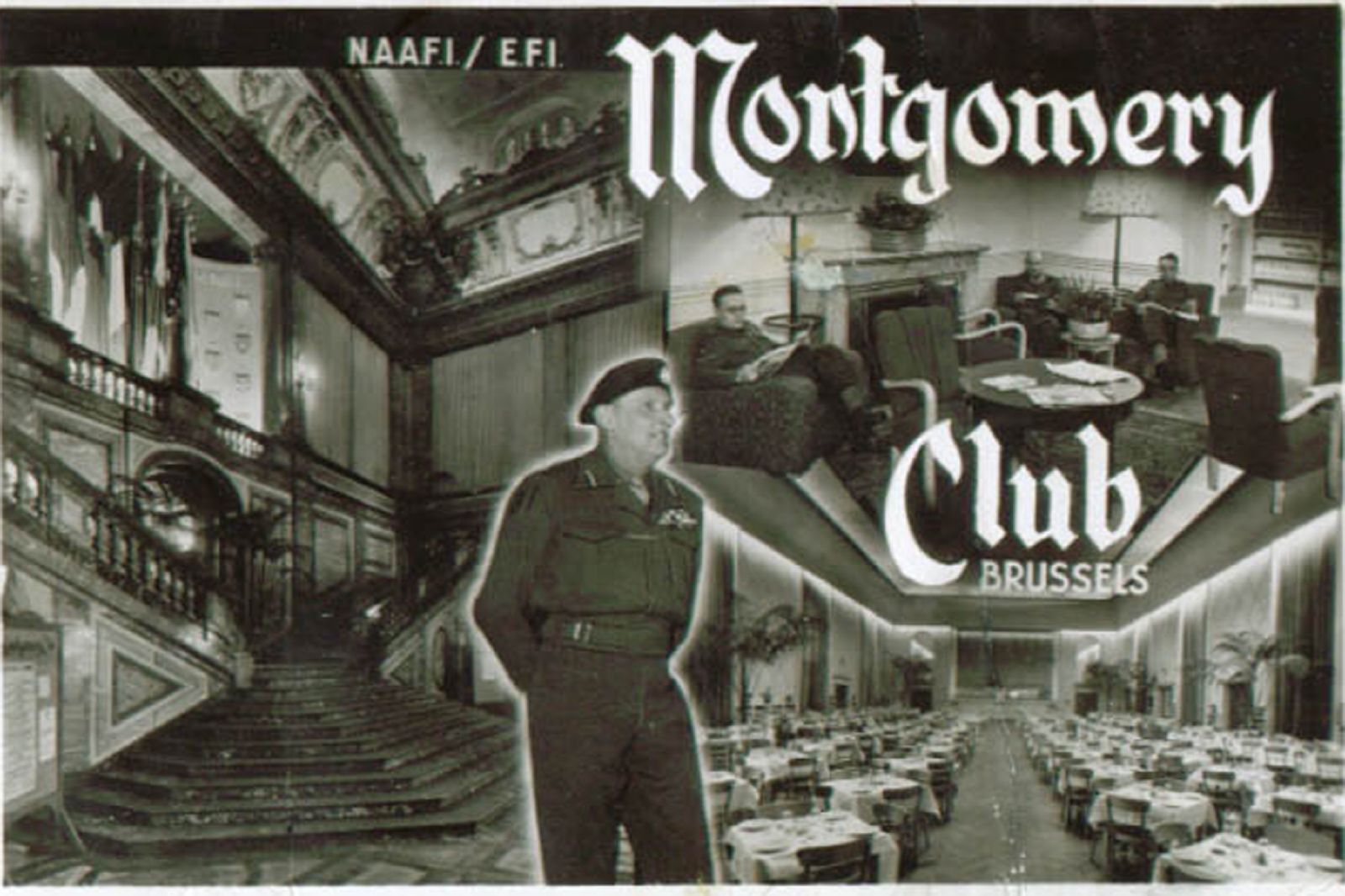
1940s Postcard from the Montgomery Club in Brussels
The official overseeing this enterprise agreed to give me housing for three days. It was the best hotel next to the park. I felt like an angel in heaven. I had a giant bed; a lamp and a wash basin in my room. I finally took a bath; I don’t ( remember when I last took a bath, but this one was so wonderful! I then went down to the restaurant for lunch. As part of my accommodation, I received free breakfast and free lunch.
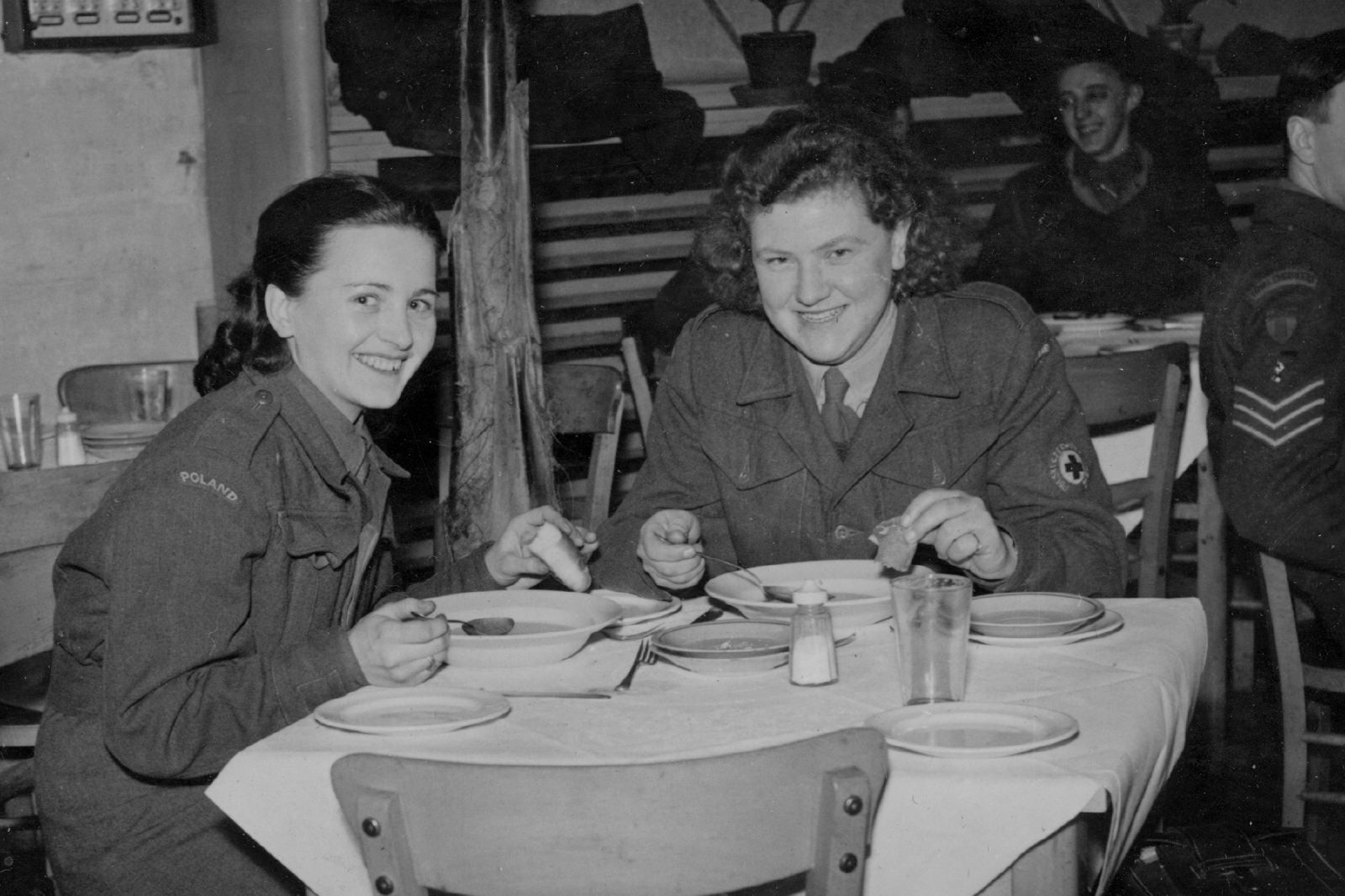
March 1946 at the Montgomery Club in Brussels: Jadzia & Mom at the Club … military personnel got half price meals here and so they allowed themselves a nice meal occasionally.
In the hotel, I was approached by someone wanting to buy cigarettes – after this transaction, I felt rich. I then found out where the Polish Student Center was located – I took a street car there. There I met these two students who were hanging around – Stach Jachner and Jurek Kostro. What struck me about Jurek was that he was thin as a needle, but had these giant eyes. Apparently they were already waiting several weeks for the scholarships that were anticipated for the continuation of their studies.
Whatever bit me on the train, by my knee, several days earlier, gave me a nasty infection. I had a fever, so I went to see a doctor at the Red Cross. He sent me to the military hospital. I went by public transportation; but once I got there, I could not walk any more and they came for me with a stretcher. Afraid that I may not qualify for the services, I pretended not to understand whenever they asked me any questions as to what military unit I was assigned to.
Finally, the giant boil that developed on my foot broke, and this horrible black and red pus flowed out. They kept me in the hospital for the entire week. Fortunately, while in the hospital I received a daily ration of cigarettes and chocolate – the source of my wealth for the coming days once I was released from the hospital. Because I lost my glasses, I also took this opportunity to get new glasses while I was in the hospital – wire frame glasses that made me look like a grandmother.
Once I was released, I hitchhiked back in a military jeep to the Red Cross facility in town. Once again I was homeless, with nowhere to sleep. I decided to go back to the same place where I obtained housing when I first arrived in Brussels, and I told them about my hospitalization, and my consequential inability to complete my Red Cross business. Fortunately, they gave me a second three day pass at the hotel.
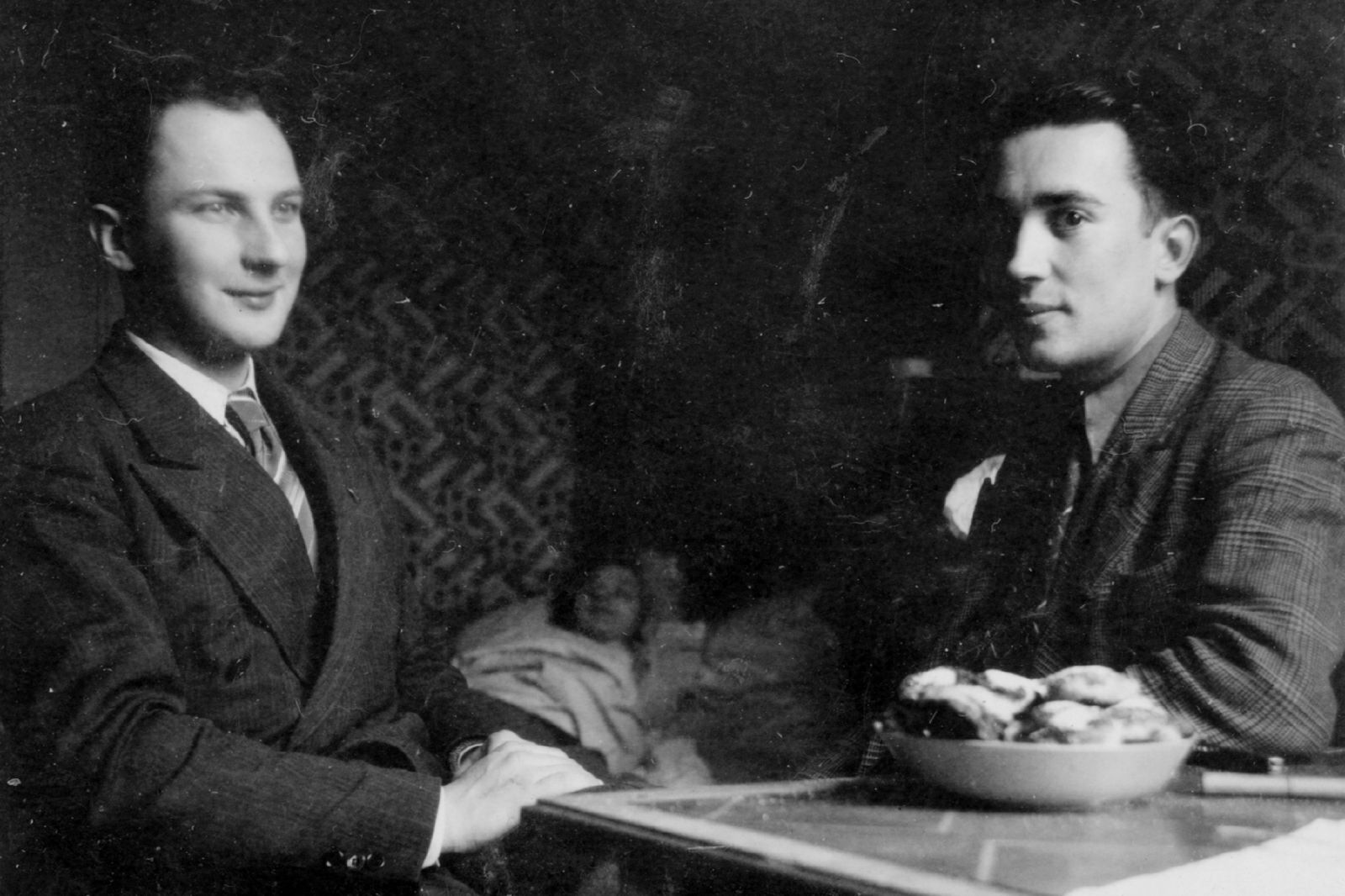
March – June 1946: My Father & Stach Jachner in Liege
Now, having a place to sleep, I went to the Polish Student Center, where I met Jurek Kostro again. Apparently he had been very worried about me – what happened that I disappeared for more than a week? I told him about my hospital stay, and I assured him that now I was fine. He kept asking me: What next? I had no idea, what next. I told him that I had to find a place to stay, as I only had housing for the next two days. He offered to help me look for a place, and I agreed that he should.
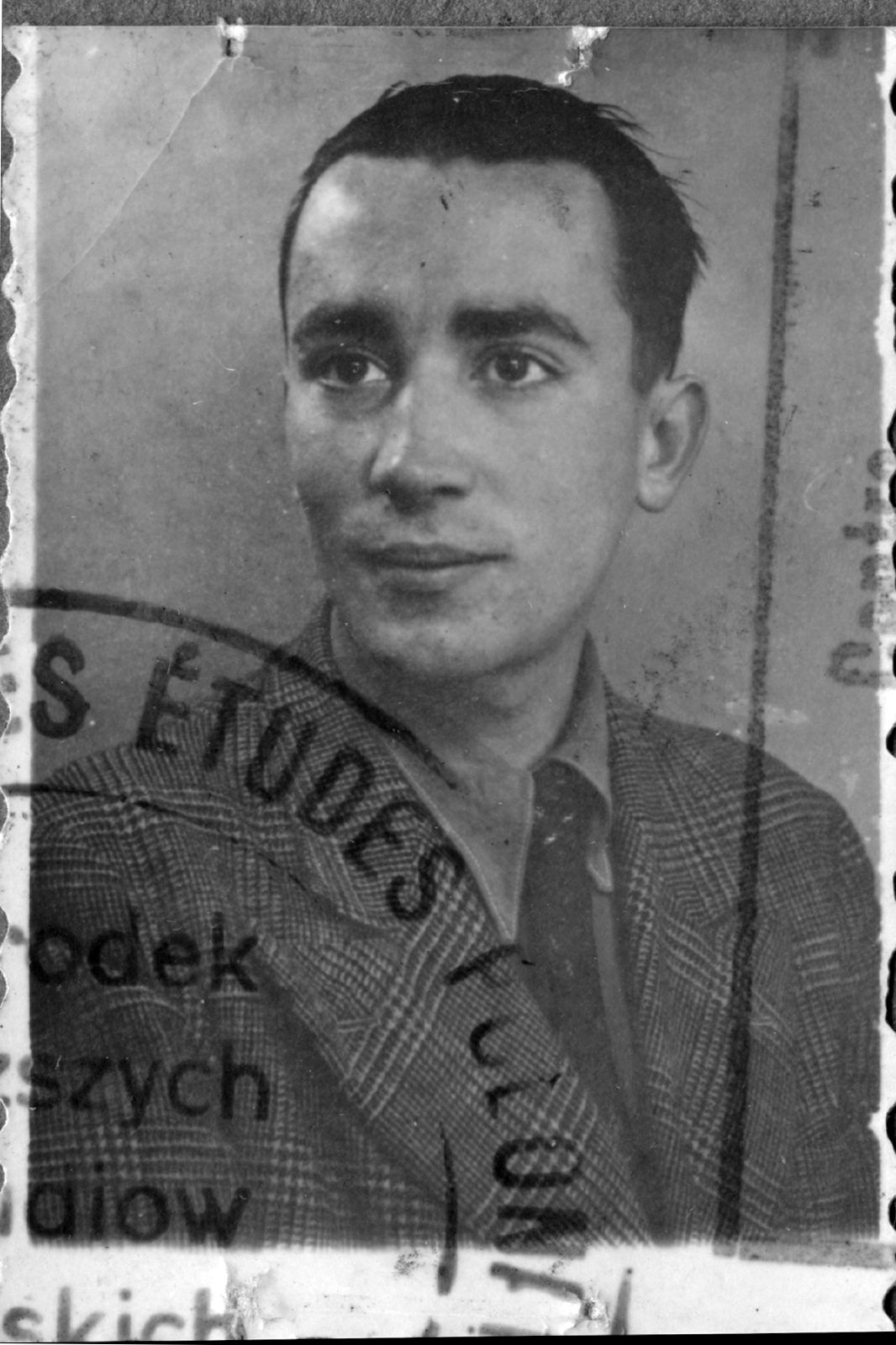
19 October 1945: My Father
The next day I saw Jurek again, and he told me that he spoke with his landlady, and she agreed to provide me with housing at her place. It was a small one room apartment on the fifth floor. However, the stairs only went to the fourth floor; and I had to use a ladder to get to my room on the fifth floor. The room had a bed, a wash basin, and a small skylight. When I agreed to rent the apartment, the landlady painted the place for me, and sprinkled the floor with various colors of paint so it looked like polka dots. In that small room, I felt like I was Marie Curie-Sklodowska, studying in Paris.
While we waited for our studies to start, my friend Jurek and I went to the free movies and to the free museums. Because I had not yet received my papers allowing me to reside in Belgium, I was not receiving any ration cards, so it was difficult to buy things – but, I was able to buy yogurt, for which you did not need ration cards; and I would buy bread on the black market from the women who came from the surrounding areas and would sell the loaves from under their dresses. We also ate a lot of tomatoes, which were readily available. I had absolutely nothing, but I was free, and I needed nothing – I was so happy!
Then I had to take an exam to qualify for the scholarship. I had to prove that I was fluent in French – that was easy, as all I had to do was to translate a short paragraph. I also had to take a medical exam, but I passed that also – they asked me a few questions about anatomy, which I still remembered the answers to. And thus, I was finally admitted to medical school in Belgium.
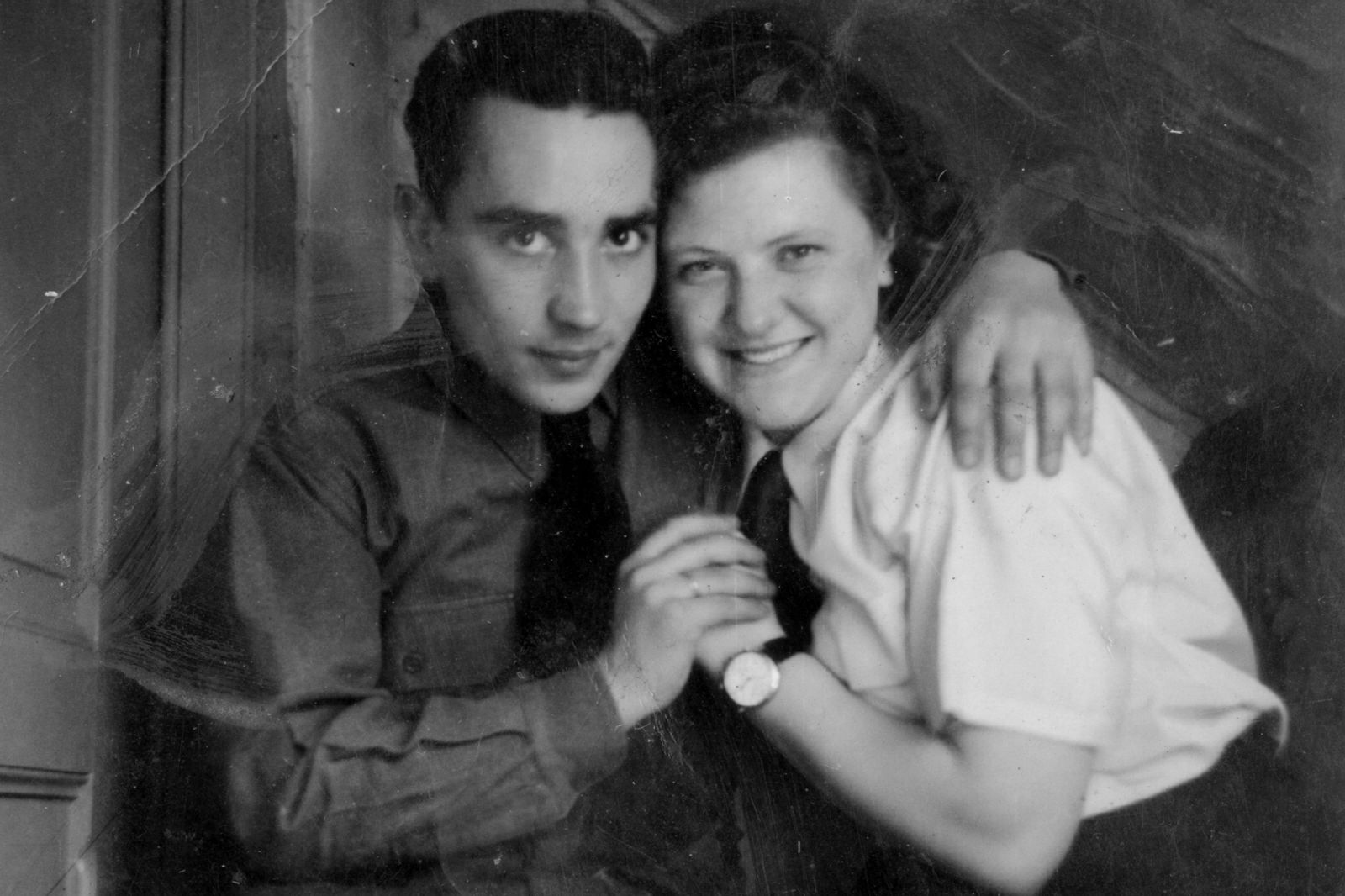
My Dad & Mom
===========
Such is my Mom’s story, as she told it to me; for you to learn from, and understand part of YOUR heritage.
My Mom’s story is just one story; many other people had similar, some better, many worse, life stories.
What I hope you get from this is to understand and respect their lives. And, in the present, to be kind to the many modern-day refuges who leave their homelands because of circumstances beyond their control. Be they from South and Central America, or from Africa, or from the Middle-East, or Asia; they are people who need help, understanding and respect. Help them … give them refuge; so that future generations may honor YOU for YOUR kindness to their ancestors.
Love,
Dziadziuś Paweł.
Back to Annual Albums OR Family Letters
Previous: November 7, 2015 — Respect
Next: November 22, 2015 — Assassination of President Kennedy
