Dear William (and Daniel, Catherine, Michael & Baby Girl Y) (and your parents), (and any future descendants and their parents),
Good morning Prince William,
The other day I wrote to you about your beginnings – but, there are many beginnings; and each beginning is related to an earlier beginning. For example, your beginning is related to your Mom’s and your Dad’s beginning; and your parents’ beginnings are related to your grandparents’ beginnings; and so on … (some people would say “etcetera” or abbreviate etcetera as “etc.”).
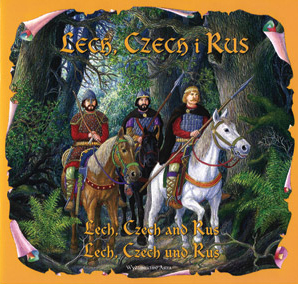
Lech, Czech & Rus
Well, let me tell you a legend about the beginnings of the Polish people — much more than a thousand years ago, there lived three brothers, known as Lech, Czech and Rus.
Lech, Czech and Rus lived in a land far to the north. Their land was beautiful, and the earth was good, but as they prospered and as their tribes grew larger, they, with their tribes, decided to set out and look for a new place to live — they were known as the Slavic people.
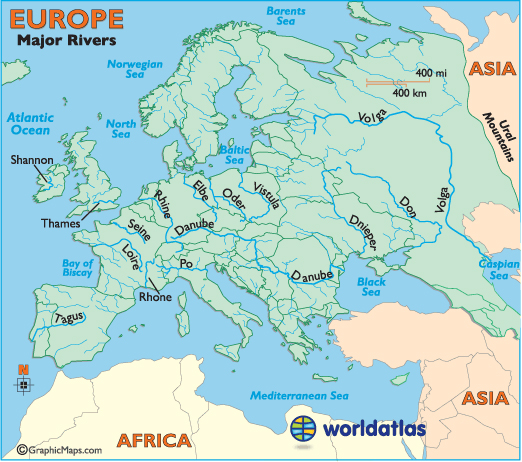
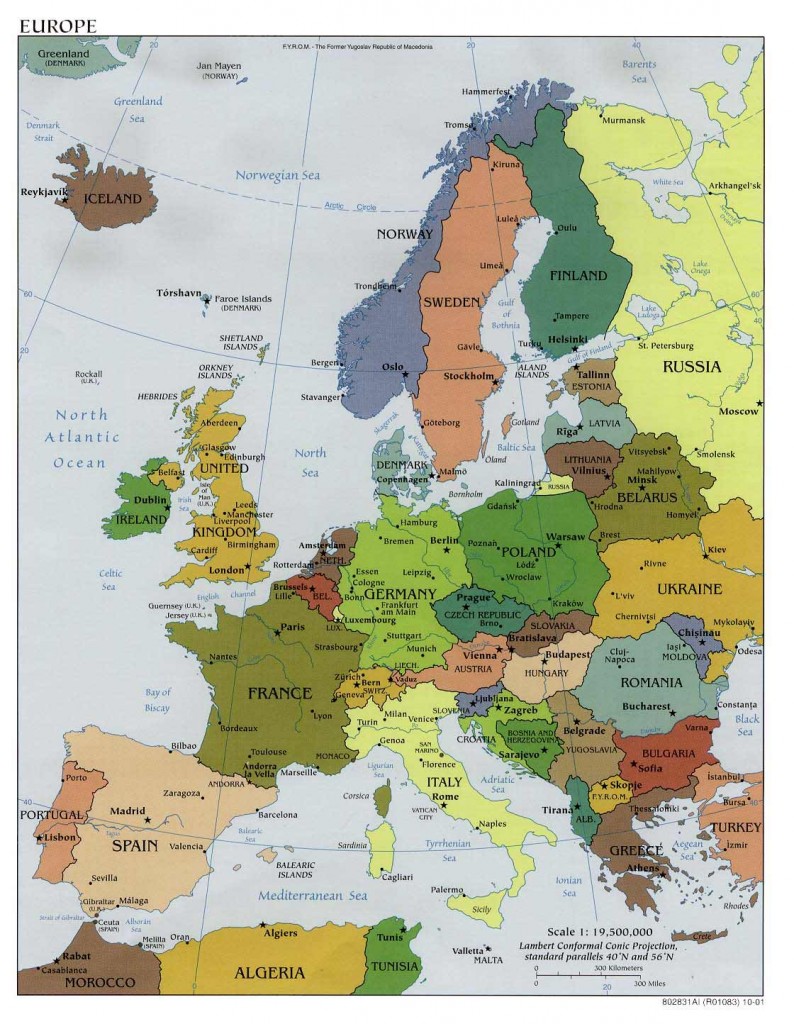
As they were wandering around eastern Europe, looking for a place where they could settle, these three brothers, Lech, Czech and Rus, came with their tribes to the lands between the Vistula (in Polish: Wisla) and Oder (in Polish: Odra) rivers.
Europe
Europe
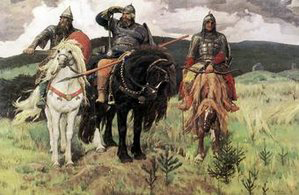
Lech saw a vast valley
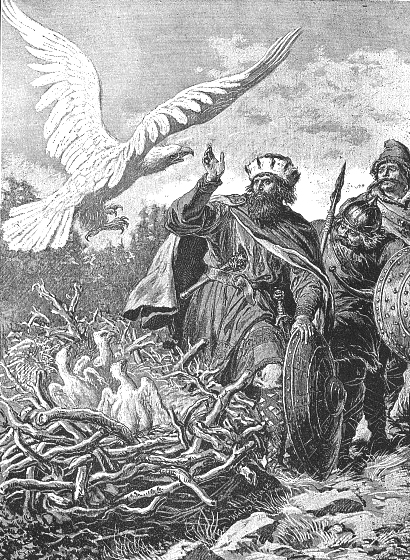
That eagle is a good sign
One day, when Lech, Czech and Rus came out of the woods, Lech saw a vast valley surrounded by hills and lakes. On the top of the highest hill was an old oak tree, and above the tree flew a great white eagle. “That eagle is a good sign from the Gods!” Lech told his brothers.
After climbing a tall tree, to the north, Lech saw the cold, deep waters of the Baltic Sea. To the west was a thick, dark forest inhabited by tribes that spoke an unintelligible language. To the east he saw an endless plain of flat and fertile land and to the south he saw hills where sheep and cattle could graze.
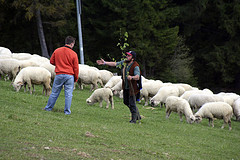
Marek & a Shepherd
— Hey, William, did you know that your Mom and Dad visited Poland in May, 2006. Here is a picture of your Dad, making friends with a shepherd in southern Poland, in Zakopane.
Marveling at the surrounding beauty, and the symbol of the white eagle, Lech decided that this would be the place where he would stay with his tribe. His brothers, Czech and Rus, however, decided to move on — Czech and his tribe went south, and Rus and his tribe went east, where each of them eventually established their own homes with their respective tribes.
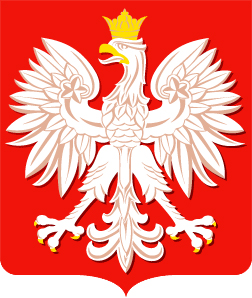
That evening, after Czech and Rus left, Lech witnessed a beautiful sunset, with a bright red sky. Recognizing the beauty of that day and place, Lech decided that the symbol for his people, from that day forward would be a white crowned eagle, with its wings spread wide, on a red background.
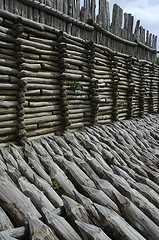
For protection from wild beasts and strange tribes, Lech and his tribe built fortifications — in honor of the eagle and its nest, they called their town “Gniezno” (in Polish, “gniazdo” means nest – like an eagle’s nest).
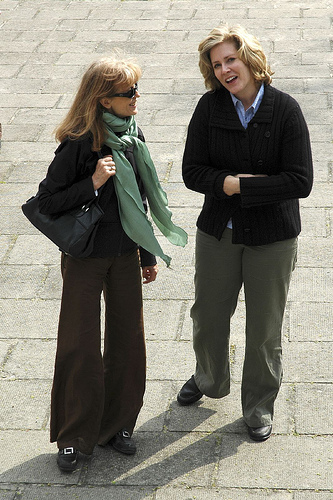
Hey, William, your Mom and Dad visited Gniezno on May 14, 2006 — here is a picture of your Mom, talking to my cousin Lilka.

Polish flag
Whenever they wanted to celebrate, the people put out red and white ribbons throughout Gniezno. Eventually, that became the red and white flag of the people; and, Gniezno became the first capital of Poland.
But, lets get back to the beginnings of Poland …
At first, the land where Lech settled with his tribe was known as Lechistan by the Turks or ‘the country of Lech’. The Muscovites often called the those people ‘Lachi’ and throughout the rest of ancient Europe, the inhabitants of Lech’s Dukedom were known as ‘Lechites’.
Although others called them Lechites, the people that came with Lech called themselves Polonians, which means “People of the Field.” They changed forests into fields for farming, and they lived in those fields (in Polish, field is “pole”). So, others started to call them ‘Polanie’ — people that lived in a ‘pole.’
As in many other places in Europe, Poland had two classes of people — the gentry and the peasants.
The original name for the Polish gentry was ‘Lechici’. The Lechici’s descendant’s were later known as ‘z Lechcicow’ or ‘from the gentry’. This term later evolved into the word ‘Szlachta’, which is used today. You, young Prince William, are a Szlachcic! (i.e., a nobleman).
Don’t forget your Coat of Arms.
Love,
Dziadziuś Paweł.
Back to Annual Albums OR Family Letters
