Dear William (and Daniel, Catherine, Michael & Baby Girl Y) (and your parents), (and any future descendants and their parents),
To be a well-rounded person, you need to understand the concept of Time Value of Money.
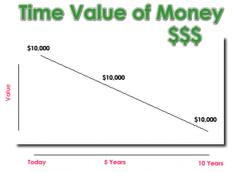

To illustrate this concept, let me ask you: If I owed you money, let say $100, would you prefer for me to return it to you today; or would you prefer for me to return it to you some day in the future; let’s say, after your death?
Of course, the answer is: It depends. It depends! It depends on what?! Well, it depends on what you can do with the money if you receive it today, versus the benefits of receiving the money some time in the future.
That concept — the concept of receiving money today, as opposed to receiving money in the future, is called “Time Value of Money.”


Generally, I would expect, most people would prefer to receive $100 today, as opposed to receiving $100 some time in the future — the reason is that if you receive the $100 today, you can spend it to obtain something you need or like; or you can invest it in something you believe will give you a better value in the future.
OK; so, let’s not be so dramatic with all this talk of distant future and death.
Let’s get practical.
If I owed you $100; and I was able to pay you back today, you would probably accept the $100 very gladly.
If, however, I told you that I forgot to being my money with me today, but I promise to return the $100 to you tomorrow, you probably will be OK with that.

But, if I told you that I do not have the money today, but I expect to have it in a month; you would probably be much less happy about that.
And, if I told you that I will not be able to pay you back until a year from now, you would be even less happy.
So, what is the cause of all this unhappiness?
Well, as I said earlier, if you had the money today, you could spend it as you wished; e.g., to buy yourself a new book or a new football or anything else you desire.

And, there is another reason for this unhappiness – by waiting for the future, you are facing RISK!

You are facing the risk that something may happen in the future such that I may not be able to pay you back!
You are also facing the risk that in the future the money may not be useful to you after all.
And, you are facing the risk that anything else may happen that diminishes your appreciation of receiving the money then.
So, given all that I said above, would you always prefer to receive the money today as opposed to receiving it in the future?
NO!!!
NO?! Why not?
Well, let’s say that all your needs are presently being met; and there is nothing in particular that you want to buy today.

Under these circumstances, you may feel that it is proper to save your money; or you may choose to invest your money.
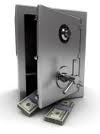
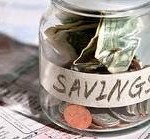
By saving your money, you are building-up cash for future needs or wants. You can save your money by putting it in a safe; or under your mattress; or into a jar.


But, saving money also has risk — the risk that there is a fire and your money is destroyed; or the risk of loosing your money (e.g., if you keep it in your pocket); or the risk that you are robbed.
To manage these risks, you may decide to deposit your money in a bank.
When you deposit your money in a bank, you are lending your money to the bank — that means, you give your money to the bank, and they promise to return your money when you ask for it.
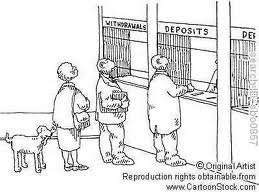
Generally, when you deposit your money in a bank, you deposit it into a Checking Account or a Savings Account.

Checking accounts we will discuss some other day — for now, let’s discuss depositing your money in a Savings Account.
When you deposit your money in a Savings Account, you are lending your money to the bank; and the bank agrees to return the money to you when you ask for it; AND, while your money is on deposit with the bank, the bank agrees to pay you interest.
Interest — what is that?! For lending your money to the bank, the bank agrees to pay you an agreed upon interest rate.
So, for example — if you deposit $1,000 into a Savings Account; and the bank agrees to pay you a 10% interest rate; after a year, you will have on deposit in your Savings Account your original $1,000, plus $100 interest earned ($1,000 x 10% = $100); so, after a year, you now have $1,100 on deposit in your Savings Account.
If you keep this $1,100 on deposit in your Savings Account for another year; at the end of the second year, you will have the $1,100 that you started with at the beginning of the year, plus $110 additional interest earned ($1,100 x 10% = $110); for a total Savings Account deposit amount of $1,210!
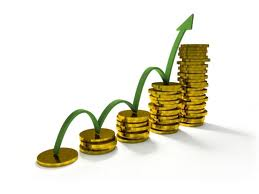
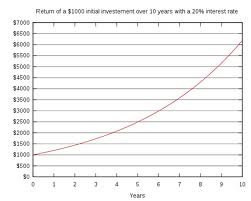
This is called “Growing Your Money” through “Compound Interest.”
The longer you keep your money on deposit in your Savings Account, the more it grows! Keeping your money in a Savings Account is a form of Investment — you dedicate your money, so that you give up present usage of that money, for the anticipated future return of your money, PLUS interest earned!
So, back to our original concept of “Time Value of Money.”
There is an Interest Rate which will satisfy you, and will make you to be willing to give up the present use of your money in exchange for a future return of your money, plus interest.
These are concepts that we will need to discuss much more in the future — but, for now, all I want you to understand is that under certain circumstances, a person may be willing to give up the present use of their money in return for an anticipated future return of their money plus interest earned — this is called the Time Value of Money.
So, William — I recommend that you do two things as soon as possible:
1. Get a Piggy Bank, where you can save the money that you do not need right away; and
2. Open a Savings Account in your local bank, so you have a place to deposit your money each time that your Piggy Bank gets full; and where your money can grow for you through Compound Interest.
Love,
Dziadziuś Paweł.
Back to Annual Albums OR Family Letters
