Dear William (and Daniel, Catherine, Michael & Baby Girl Y) (and your parents), (and any future descendants and their parents),
I came across my “Draft Card” — and it brought back many sad and exciting conflicting memories.
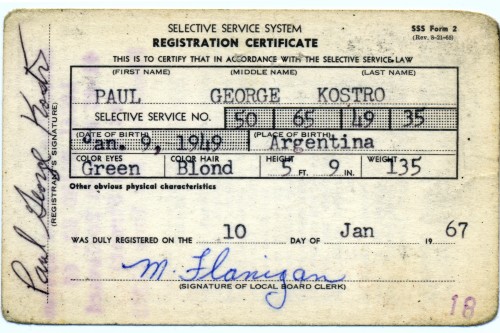
Front of Selective Service Card also known as a Draft Card
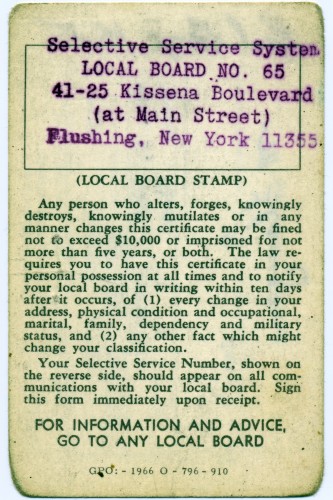
Back of my Selective Service Card

I was born on January 9, 1949 — one day after my 18th birthday, I registered as I was required to do. I remember those moments very well.
* * * * * * * * * * * * * *
The Selective Service System is a means by which the United States government maintains information on those potentially subject to military conscription. Most male U.S. citizens and male immigrant non-citizens between the ages of 18 to 25 are required by law to have registered within 30 days of their 18th birthday.
The Selective Service Act of 1917 was passed on May 18, 1917 creating the Selective Service System. The Act gave the President the power to conscript men for military service. All males aged 21 to 30 were required to register for military service for a service period of 12 months; the age limit was later raised in August 1918 to a maximum age of 45. The military draft was discontinued in 1920.
The Selective Training and Service Act of 1940 was passed on September 16, 1940, establishing the first peacetime conscription in United States history. It required all males between the ages of 18 to 65 to register for Selective Service. It originally conscripted all males aged 21 to 36 for a service period of 12 months, but was later increased to males aged 18 to 45 for a military service period of 18 months. Upon declaration of war, the service period was extended to last the duration of the war plus a six-month service in the Organized Reserves.
The Selective Service System created by the 1940 Act was terminated by the Act of March 31, 1947, and the Selective Service Act of 1948 created a new and separate system. All males 18 years and older had to register for Selective Service. All males between the ages of 19 to 26 were eligible to be drafted for a service requirement of 21 months. This was followed by a commitment for either 12 consecutive months of active service or 36 consecutive months of service in the reserves, with a statutory term of military service set at a minimum of five years total. Conscripts could volunteer for military service in the Regular Army for a term of four years or the Organized Reserves for a term of six years.
The outbreak of the Korean War fostered the creation of the Universal Military Training and Service Act of 1951. This lowered the draft age from 19 to 18½, increased active-duty service time from 21 to 24 months, and set the statutory term of military service at a minimum of eight years. Students attending a college or training program full time could request an exemption, which was extended as long as they were students.
President Kennedy set up Executive Order 11119 (signed on September 10, 1963), granting an exemption from conscription for married men between the ages of 19 and 26. President Johnson later rescinded the exemption for married men without children by Executive Order 11241 (signed on August 26, 1965 and going into effect on midnight of that date). However, married men with children or other dependents and men married before the Executive Order went into effect were still exempt. President Reagan revoked both of them with Executive Order 12553 (signed on February 25, 1986).
The Military Selective Service Act of 1967 expanded the ages of conscription to the ages of 18 to 35. It still granted student deferments, but ended them upon either the student’s completion of a four-year degree or his 24th birthday, whichever came first.
On November 26, 1969 President Nixon signed an amendment to the Military Selective Service Act of 1967 that established conscription based on random selection (lottery). The first “draft lottery” was held on December 1, 1969.
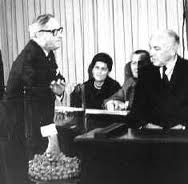
A lottery drawing was held on December 1, 1969, at Selective Service National Headquarters in Washington, D.C. This event determined the order of call for induction during calendar year 1970; that is, for registrants born between January 1, 1944, and December 31, 1950.
There were 366 blue plastic capsules containing birth dates placed in a large glass container and drawn by hand to assign order-of-call numbers to all men within the 18-26 age range specified in Selective Service law.
With radio, film, and TV coverage, the capsules were drawn from the container, opened, and the dates inside posted in order. The first capsule – drawn by Congressman Alexander Pirnie (R-NY) of the House Armed Services Committee – contained the date September 14, so all men born on September 14 in any year between 1944 and 1950 were assigned lottery number 1. The drawing continued until all days of the year had been paired with sequence numbers.
I remember listening to the drawing on my transistor radio. My number was such that I decided to stay in R.O.T.C.
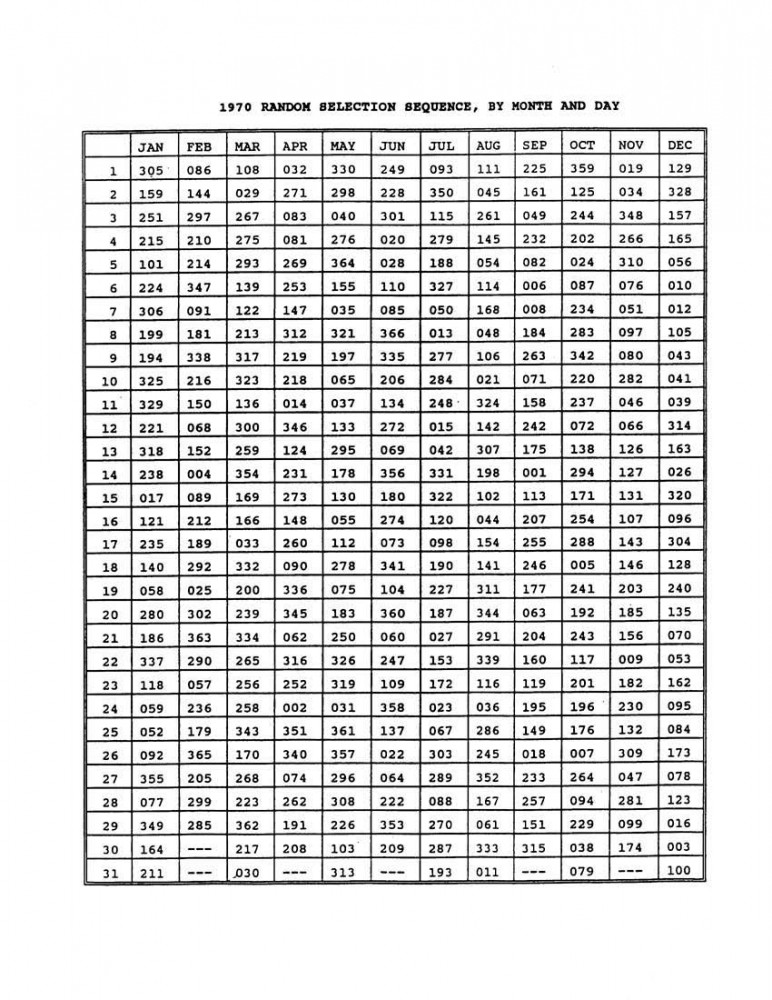
To find the lottery number assigned to me (my birth month and day is January 9, look down the column from “Jan” until it matches up with number “9” on the left side of the table. The corresponding number in that cell, for instance, is “194.” What that means is that all men born on January 9, for the specific years of birth from 1944 to 1950 (I was born in 1949), were assigned the lottery number 194.
The last draft call was on December 7, 1972, and the authority to induct expired on June 30, 1973. The date of the last drawing for the lottery was on March 12, 1975. Registration with the Selective Service System was suspended on April 1, 1975, and registrant processing was suspended on January 27, 1976.
However, registration was resumed in July 1980 for men born in 1960 and later, and is in effect to this present time. Men are required to register within 30 days of their 18th birthday.
William — Do not forget to register, if you are still required to, when you turn 18.
Love,
Dziadziuś Paweł.
Back to Annual Albums OR Family Letters
